
Across 90-100 jobs we have assessed in Bristol and Bath, 50% of blown plaster was caused by moisture, 30% by age-related key failure on lath and plaster, and 20% by original poor adhesion—and the fact that the blown area is on average 30-40% larger than what is visible is why so many patch repairs fail within a year.
What Blown Plaster Actually Is
Blown plaster occurs when there is a complete loss of adhesion between the plaster finish and the substrate (the wall or ceiling behind it). Instead of being bonded solid to the masonry or lath, air pockets form, resulting in a distinct, hollow, drum-like sound when tapped. It is important to distinguish this from standard cracked plaster; while cracks may suggest minor surface movement or drying shrinkage, blown plaster indicates structural debonding. For more on early indicators, review our guide on the signs of blown plaster.
What Most Guides Say vs What Our Repairs Show
Most general advice lists generic causes, but our site data across 90+ property assessments provides a clearer picture of why repairs fail.
What most guides say | What our 90+ repairs show |
|---|---|
Plaster just ‘gets old’ | 50% moisture, 30% age-related key failure, 20% poor initial adhesion |
Visible cracks mean it is blown | Visible damage is 30-40% smaller than the actual debonded area |
Patching is usually safe | Patching the visible area alone leads to failure within a year when the surrounding “hollow” plaster continues to detach |
How to Check Blown Plaster Yourself — The Two-Step Method
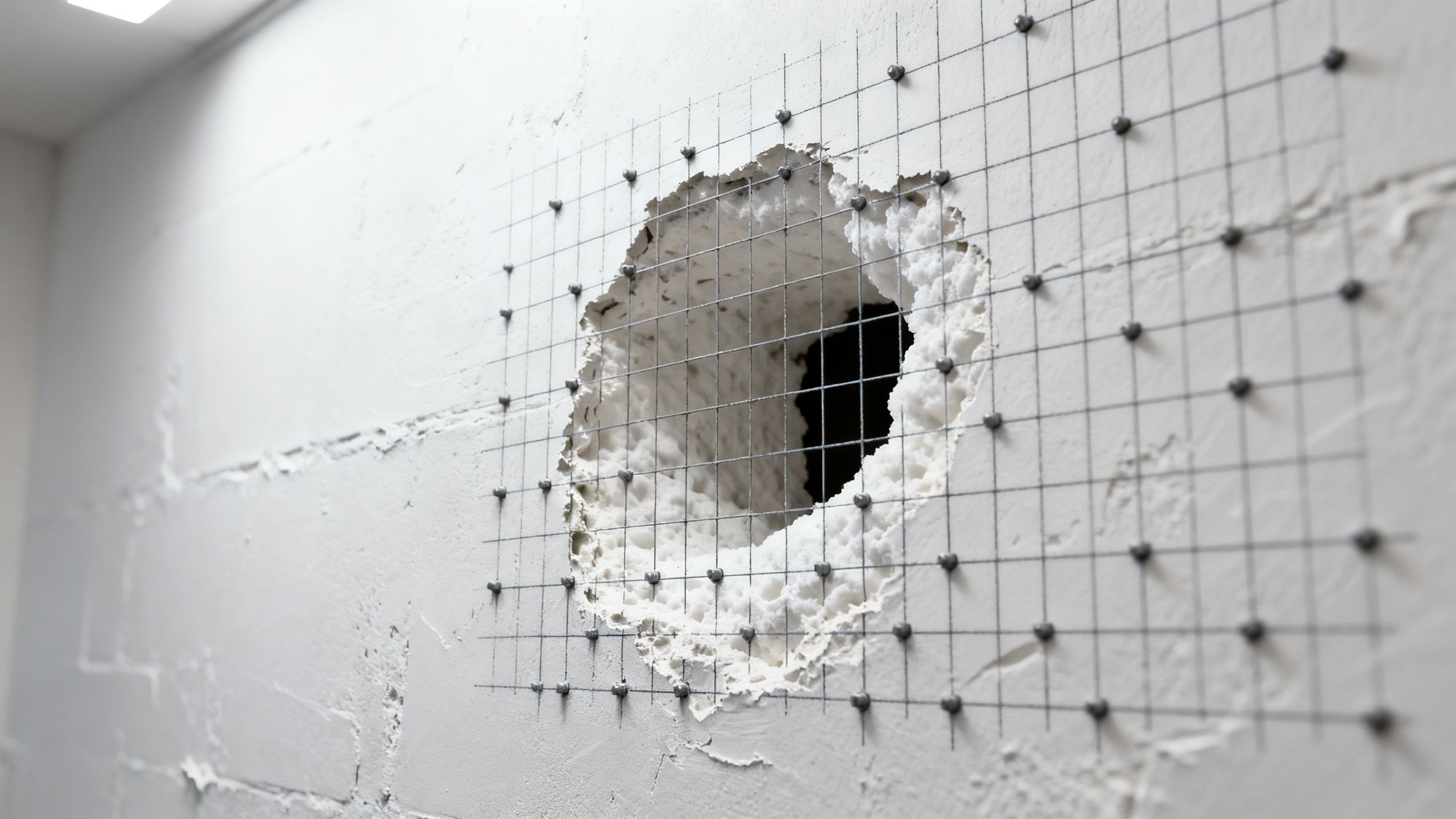
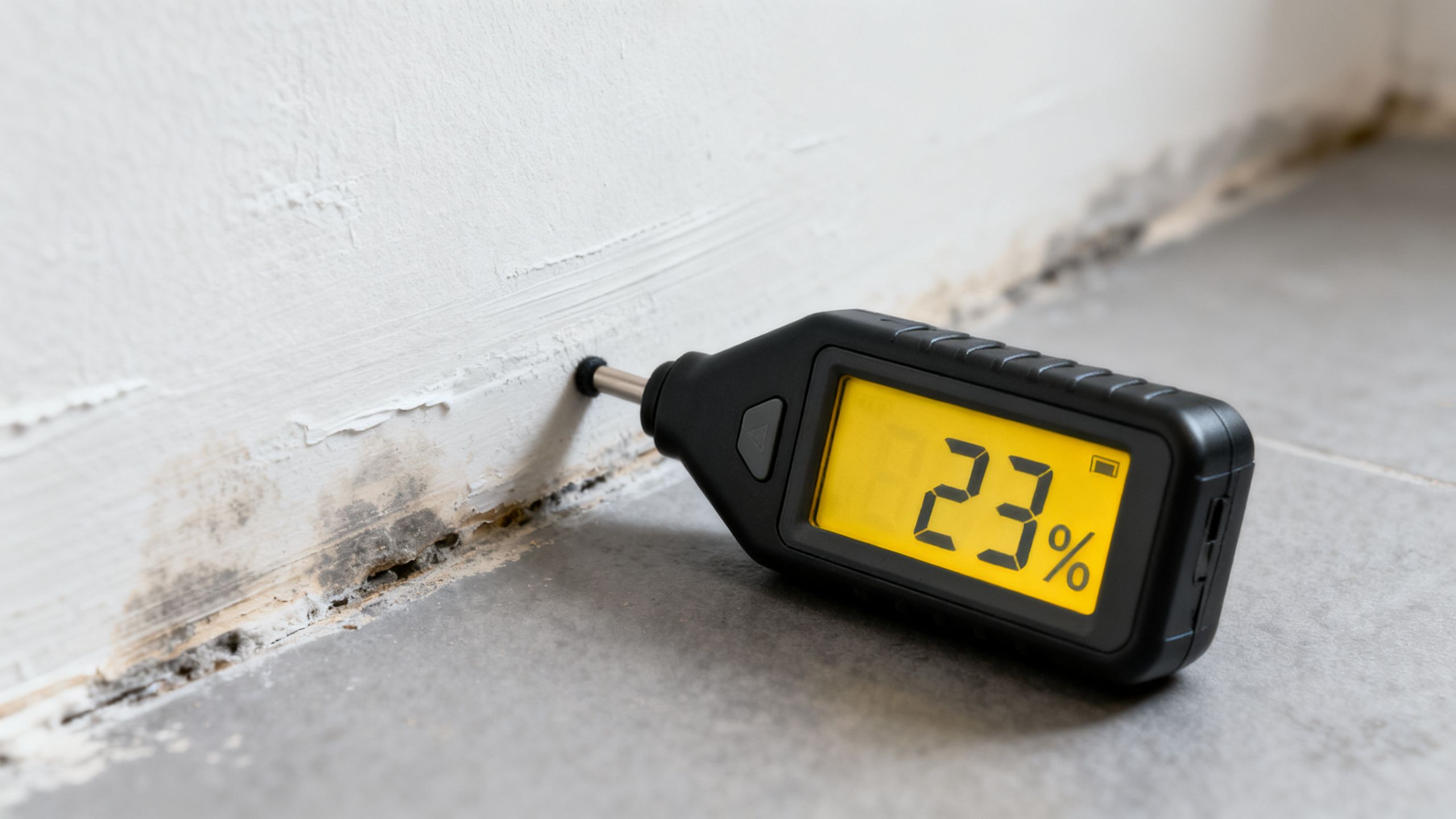
We tell every customer to follow a simple two-step process to map the damage before assuming a simple patch will work. First, perform a grid tap test, moving systematically over the wall to mark out every area that sounds hollow, not just the part that is cracked; this often reveals that the problem is 30-40% larger than first assumed. Second, conduct a moisture assessment by checking if the area is near external walls, ground floors, or sources of water. If moisture is present, you must locate and fix the source before attempting any plastering work. For more detail, see our guide on identifying hollow plaster.
The 3 Real Causes and How Often Each Occurs
Moisture — Around Half of All Cases
Leakage, penetrating damp, or rising damp frequently weaken the bond between the plaster and the wall. You can identify this by searching for visual signs like damp smells, salts on the surface, or local staining. If this is the cause, the leak must be fully rectified first. Reference the official government damp and mould guidance for property owners.
Age-Related Key Failure — Around 30%
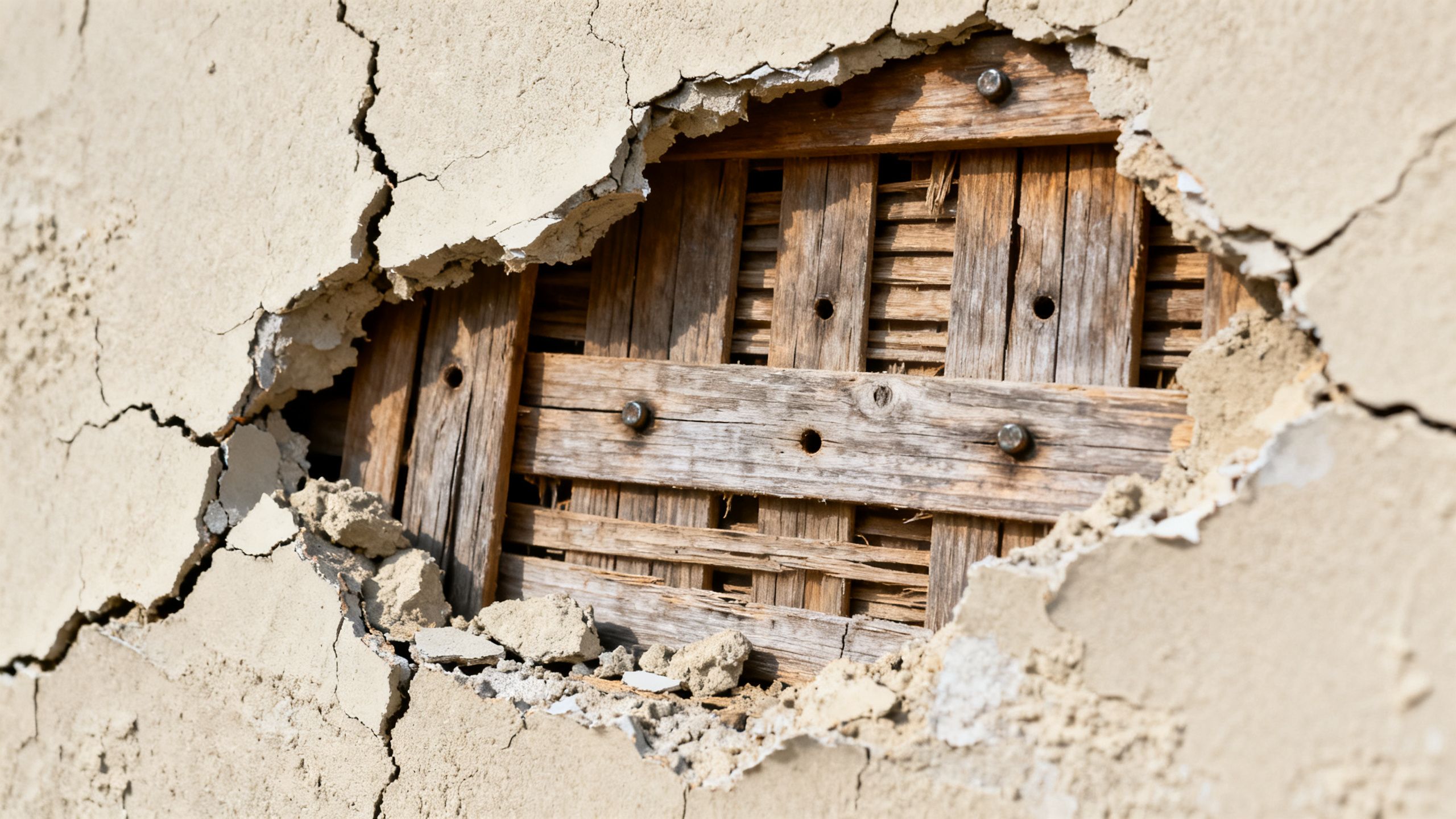
Common in older Victorian properties across Bristol, this occurs when the plaster nibs (the parts of the plaster that push through the lath to grip the wall) degrade over decades. This eventually leads to the material sagging or detaching entirely from the ceiling structure.
Original Poor Adhesion — Around 20%
This happens when a wall was never prepared correctly during its original installation, such as a lack of bonding agent or excessive dust behind a coat of British Gypsum Bonding or Hardwall. These patches usually come away completely clean and dry, separating from the wall without any moisture present.
The 4 Most Common Blown Plaster Scenarios and Costs
Small Blown Patch on a Dry Internal Wall
These are often caused by poor initial adhesion or accidental impact damage. We cut back to the stable edge, prime the substrate, and re-skim. Costs typically range from £120-350.
Blown Plaster Caused by Moisture
Repairing this requires a two-part approach: fixing the water source, then stripping the ruined plaster and allowing the substrate to fully dry before replacing. Costs range from £400-900+.
Blown Lath and Plaster Ceiling
Due to age-related key failure, these often require the ceiling to be boarded over or replaced entirely. Given the complexity of ceiling work, these repairs range from £600-2,000+.
Blown Plaster or Render on a Solid External Wall
External walls in period properties require breathability. Using the wrong materials can accelerate damage. For further reading on this, see our article on blown render repair. Costs typically range from £450-1,200.
Is Blown Plaster Dangerous? When It’s Urgent vs When It Can Wait
Not every instance of blown plaster is an emergency. A small, stable dry patch on a low-traffic internal wall can often wait until you have the budget to repair it. However, ceiling detachment is a genuine safety concern, as is any large area where moisture is actively spreading. Because our data shows the area is 30-40% larger than what is visible, we always recommend assessing the risk of collapse before assuming a quick fix will suffice.
FAQ
What is blown plaster? It is the loss of adhesion between the plaster layer and the wall, meaning it is no longer structurally bonded.
Is blown plaster dangerous? It is only dangerous if the area is large (like a ceiling), prone to falling, or if moisture is spreading rapidly.
What causes plaster to blow? Usually moisture ingress (50%), age-related key failure (30%), or poor initial application (20%).
Can you just patch blown plaster? No, if you don’t tap out the full extent, the surrounding area will inevitably detach within a year.
How do I know how much plaster is blown? Use a grid tap test; mark where it sounds hollow to find the true, larger extent.
Does blown plaster mean I have damp? Often, yes, but not always. It could be old age or poor installation.
How much does it cost to fix blown plaster? Simple patches start around £120, while major moisture repairs or ceiling replacements can go upwards of £2,000.
Can I fix blown plaster myself? While easy to spot, successful repair requires specific materials like bonding agents and PVA; poorly done patches often require professional removal and redo.