
Insulated plasterboard is one of the most cost-effective ways to warm a cold solid-wall room, and Bristol has thousands of them — but across over 40-50 properties we have worked on, we have found that fitting it wrong can trap condensation and cause the exact damp the homeowner was trying to escape. Of those jobs, the single biggest issue we run into is condensation risk when it is fitted without thinking about the wall behind it. Roughly half the solid-wall properties we assess for internal insulation need a proper vapour-control strategy, because sealing insulation against a cold solid wall can move the dew point into the wall or behind the board, causing hidden damp and mould.
What Insulated Plasterboard Actually Does
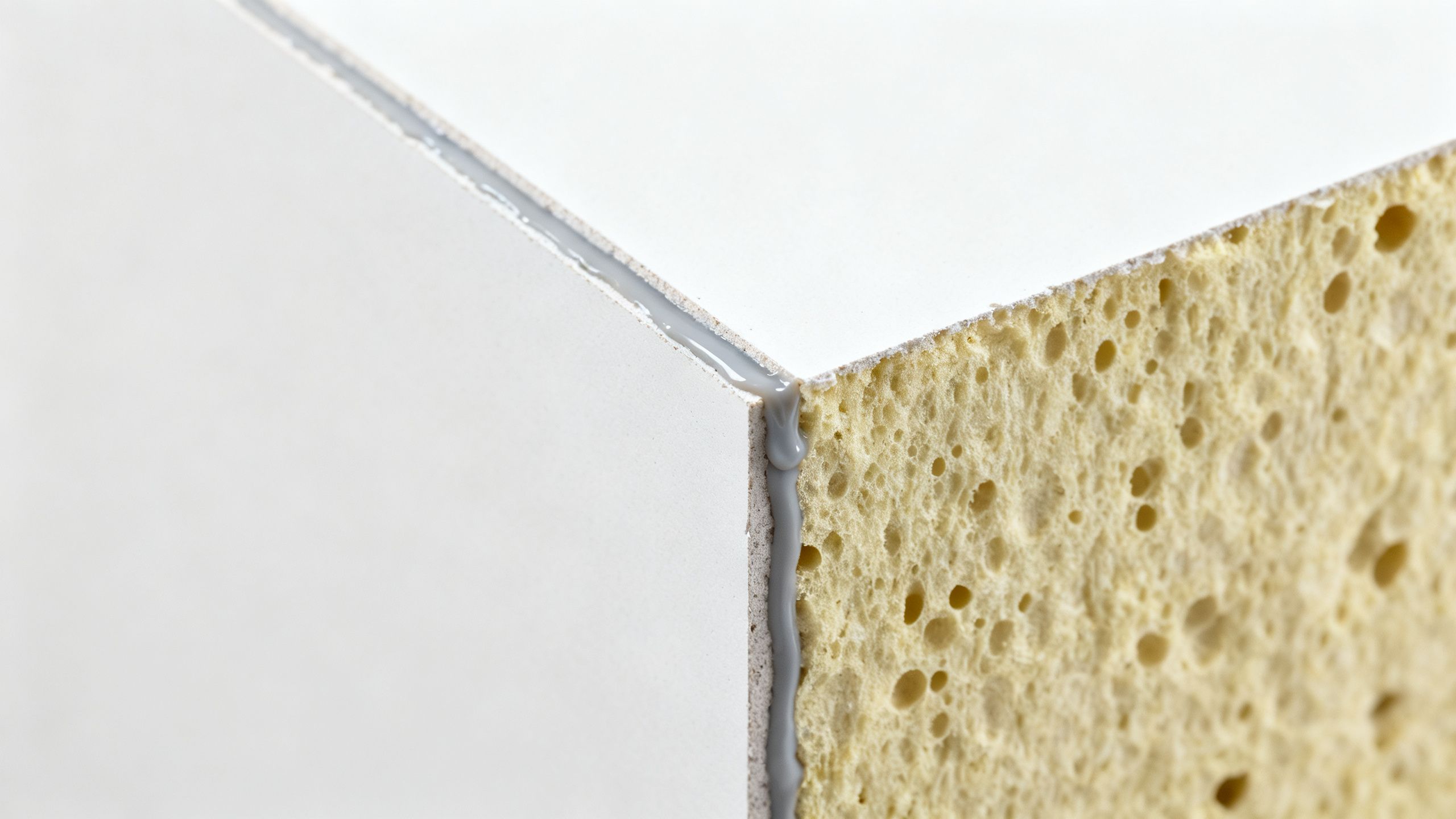
Insulated plasterboard consists of standard drywall bonded to a layer of insulation, typically high-performance PIR or phenolic foam. On solid-wall properties common in Bristol—such as our typical pre-1920 terraces—there is no cavity to fill. External insulation is often restricted by planning or cost, making internal wall insulation the primary method for cutting heat loss. When installed correctly, it acts as a thermal barrier, keeping the heat inside the room rather than letting it soak into the cold masonry. This is a significant step beyond simply finishing a wall with traditional, non-insulating lime plastering or gypsum.
The Real Risk Nobody Explains Simply — Condensation Behind the Board
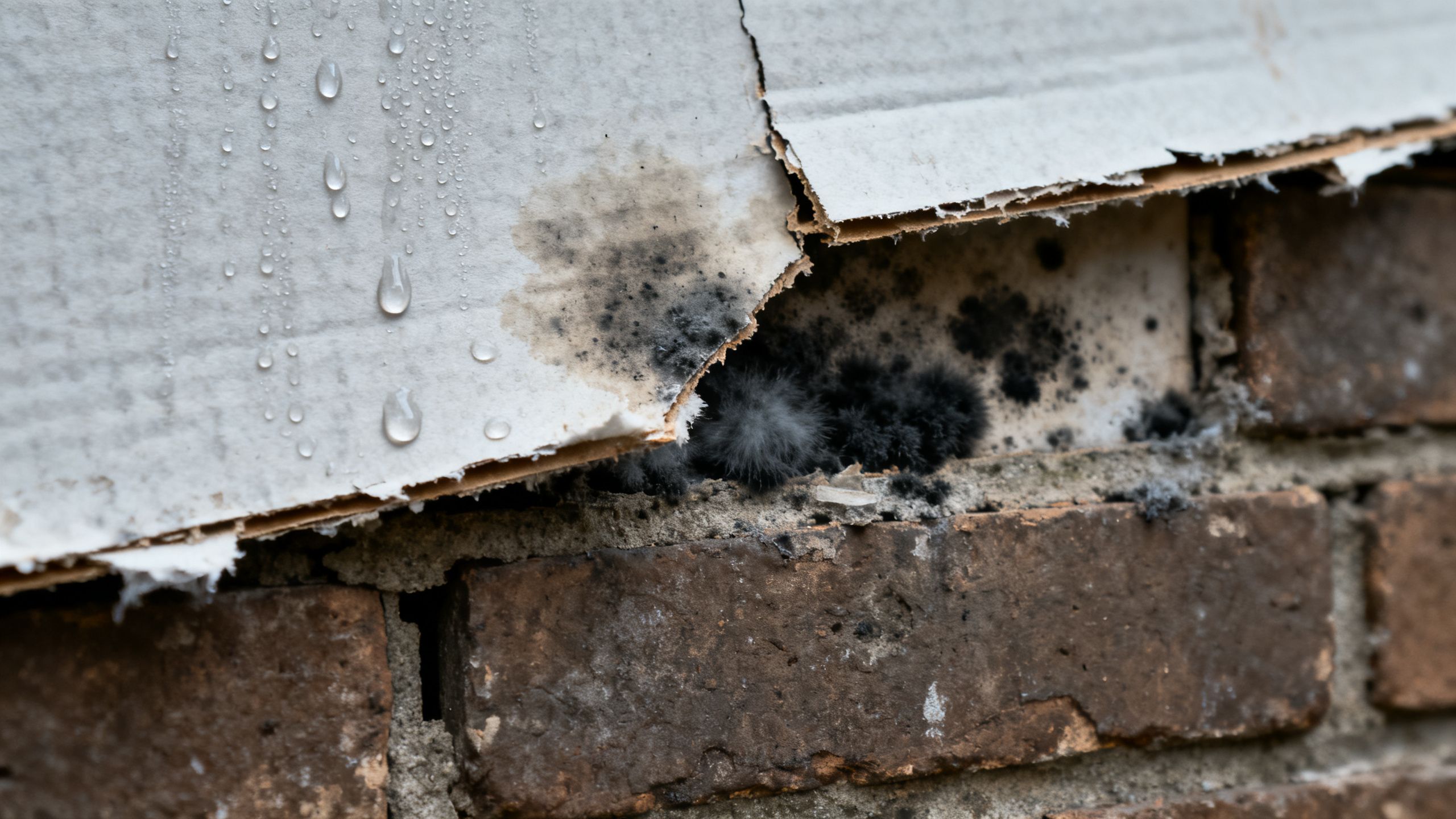
The fundamental risk with internal wall insulation is shifting the dew point. A solid wall in a Victorian home is naturally porous and cold. When you add insulation to the inside, the wall behind the board becomes significantly colder because it is no longer being warmed by the air inside the room. Meanwhile, warm, moist air from cooking, bathing, or breathing still permeates the room. If that air reaches the cold surface of the masonry behind your new insulation, it turns into water. If the detailing is poor, this moisture gets trapped. This hidden damp leads to mould growth that can compromise both the structure and your indoor air quality. For guidance on performance, you can refer to the Historic England internal wall insulation guidance.
What Most Guides Say vs What We Find on Bristol Jobs
While technical documents focus heavily on U-values and theoretical physics, our experience at Gents Venetian Plastering & Rendering is firmly rooted in the local housing stock. We treat the technical warnings as essential practical requirements rather than just academic theories.
| What most guides say | What we find on Bristol jobs |
|---|---|
| Focus on U-value targets | The focus is on long-term wall health |
| Often use blanket warnings about moisture | Half of solid walls need a specific vapour-control strategy |
| Theoretical academic modelling | Practical site conditions vary wildly |
The Detailing That Makes or Breaks It
Treating Insulated Board Like Ordinary Plasterboard
The most common mistake we see is treating insulated plasterboard like ordinary plasterboard by dot-and-dabbing it straight onto a cold solid wall. When you use dabs, air spaces are left behind the boards. Warm, moist air tracks into these gaps, bypasses the insulation, and hits the cold wall, where it condenses. Proper installation requires a continuous vapour-control layer and a full-bond or mechanical fix approach to ensure the wall is sealed from internal moisture. This is a completely different process to standard wet plastering or a basic domestic dot-and-dab install.
Cold Bridges at Reveals, Floor and Ceiling
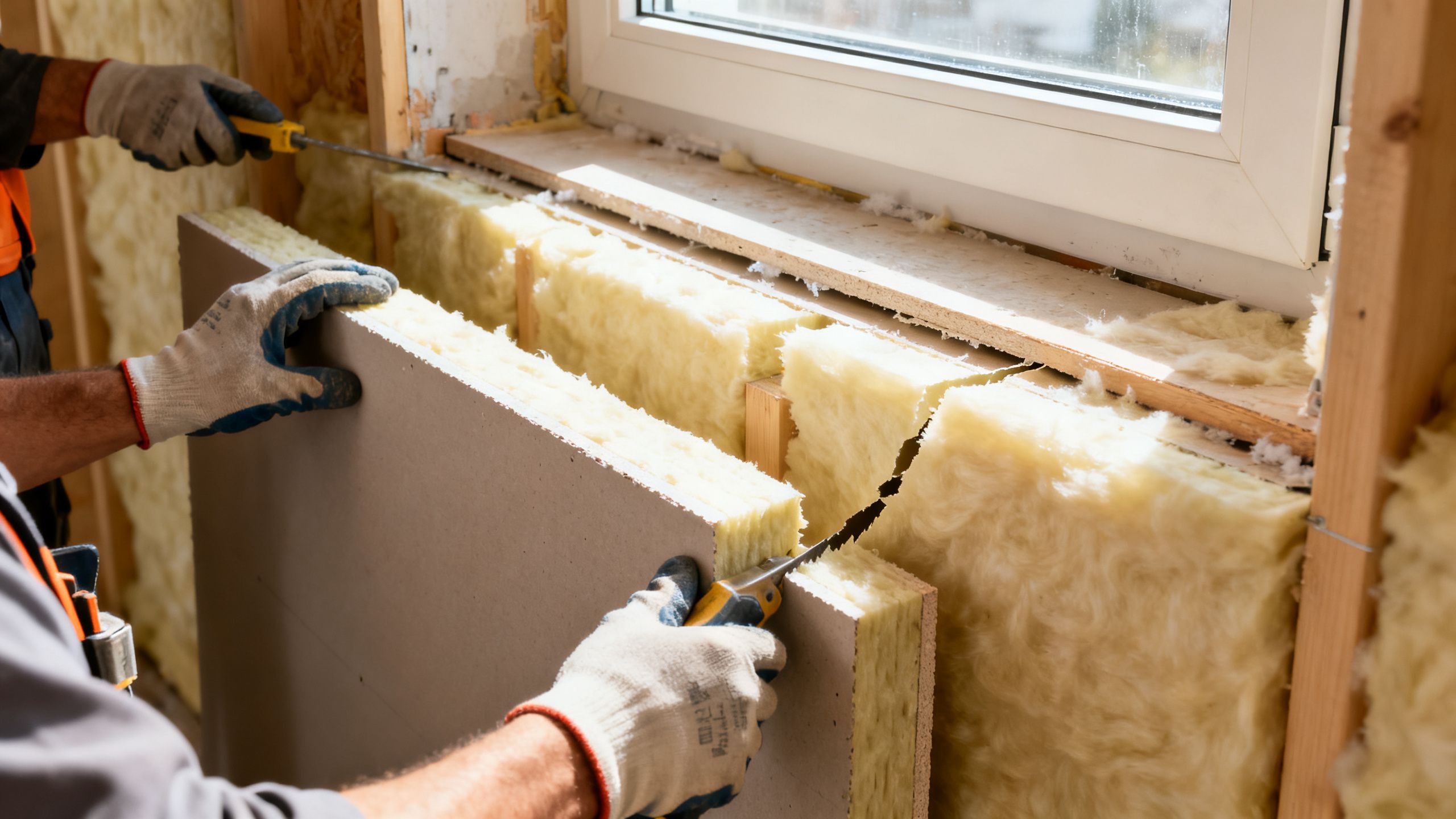
Heat will always find the quickest route to escape. If you ignore the edges—specifically the window and door reveals, as well as floor and ceiling junctions—you create cold bridges. At these spots, the temperature difference between the insulated wall and the uninsulated reveal causes significant condensation and black mould. Proper detailing involves carrying the insulation into the reveals and ensuring all edges are perfectly sealed to maintain a continuous thermal envelope.
What We Tell Every Customer Before Fitting It
We tell every customer considering internal wall insulation three things. First, it genuinely works — on a cold solid-wall room it is one of the most cost-effective ways to make it warmer and cheaper to heat. Second, it must be detailed properly: the right insulated board for your wall, a continuous vapour-control layer, insulation carried into the window and door reveals, and the edges sealed — not just board stuck on and skimmed. Third, it slightly reduces room size and you will need to extend socket boxes and possibly move radiators, so factor that into your design. We provide quotes based on this rigorous attention to detail to ensure your home remains healthy.
What Internal Wall Insulation Costs in Bristol
Costs depend on board type (PIR, phenolic, or woodfibre), wall prep, and the complexity of moving services. A typical single external-facing room costs between £1,200 and £2,500 including professional detailing.
| Cost factor | What it covers | Typical Bristol cost |
|---|---|---|
| Board & Fitting | PIR or phenolic insulation boards | £45-70 per m2 |
| Vapour Control | Sealing and membranes for moisture protection | Included in trade labour |
| Making Good | Radiators, sockets, skirting, reveals | Per room project basis |
When It's Right — And When to Consider a Breathable Alternative
Internal wall insulation carries inherent moisture risks on solid walls. If a building already has a failing external face, such as cracked render or failing pointwork, that must be fixed before any internal work is considered. In some cases, we recommend a breathable, vapour-permeable system—such as woodfibre or lime-based boards—rather than impervious PIR/phenolic. While these have a lower U-value, they allow the wall to manage moisture naturally, which is often the safer, better choice for historic masonry that needs to 'breathe.'
FAQ
- What is insulated plasterboard? It is a composite board featuring a layer of rigid insulation (PIR or phenolic) bonded to the back of a plasterboard, designed to reduce heat loss through walls.
- Does internal wall insulation cause damp? It does not if installed correctly, but if fitted without a vapour-control strategy, it can trap condensation and lead to damp.
- How much does internal wall insulation cost? Costs typically range from £1,200 to £2,500 for a single room, varying based on the complexity of electrical and radiator works.
- Can you dot and dab insulated plasterboard? We strongly advise against this on solid walls as it allows moist air to circulate behind the boards.
- How much room space does internal wall insulation take up? Depending on the board thickness, you will lose between 50mm and 100mm from each insulated wall surface.
- Is internal wall insulation worth it? Yes, it is one of the most effective ways to lower heating bills and improve comfort in traditional cold, solid-walled properties.
- Do you need a vapour barrier with insulated plasterboard? Yes, most solid-wall installations require a continuous vapour-control strategy to prevent condensation.
- Can you insulate a solid wall from the inside? Yes, this is the standard solution for properties where external insulation is not viable.
- What is the best internal wall insulation for a Victorian house? Often a breathable system like woodfibre is preferred to manage historic moisture levels, provided it is installed by experienced professionals.
- Do I need planning permission for internal wall insulation? Generally, internal works do not require planning permission, but always check with your local authority if your building is listed.