
Spray cork can help with condensation and surface damp because it insulates and warms a cold wall while allowing moisture to escape. It is not a cure for penetrating or rising damp: those problems must be diagnosed and fixed at source before any cork coating is applied.
How spray cork helps with condensation
Condensation forms when warm, moisture-laden air meets a cold surface. In Bristol homes, cold solid-wall properties can be particularly prone to this, especially in winter or where ventilation is limited. Water droplets on cold walls can encourage mould to grow.
A spray cork coating adds an insulating layer that can make the wall surface warmer. That can help reduce the conditions that cause condensation. Cork is also vapour-permeable, so moisture can pass through the coating and disperse rather than being sealed behind an impermeable layer. This is where spray cork has a genuine role: helping with condensation and surface damp, not repairing the source of a leak or rising damp.
Gents Venetian Plastering & Rendering is newly offering spray cork across Bristol. Our team has more than 50 years of combined experience in plastering and rendering, but we won’t claim a history of cork projects or results we haven’t built up yet. Read more about our spray cork coating service in Bristol.
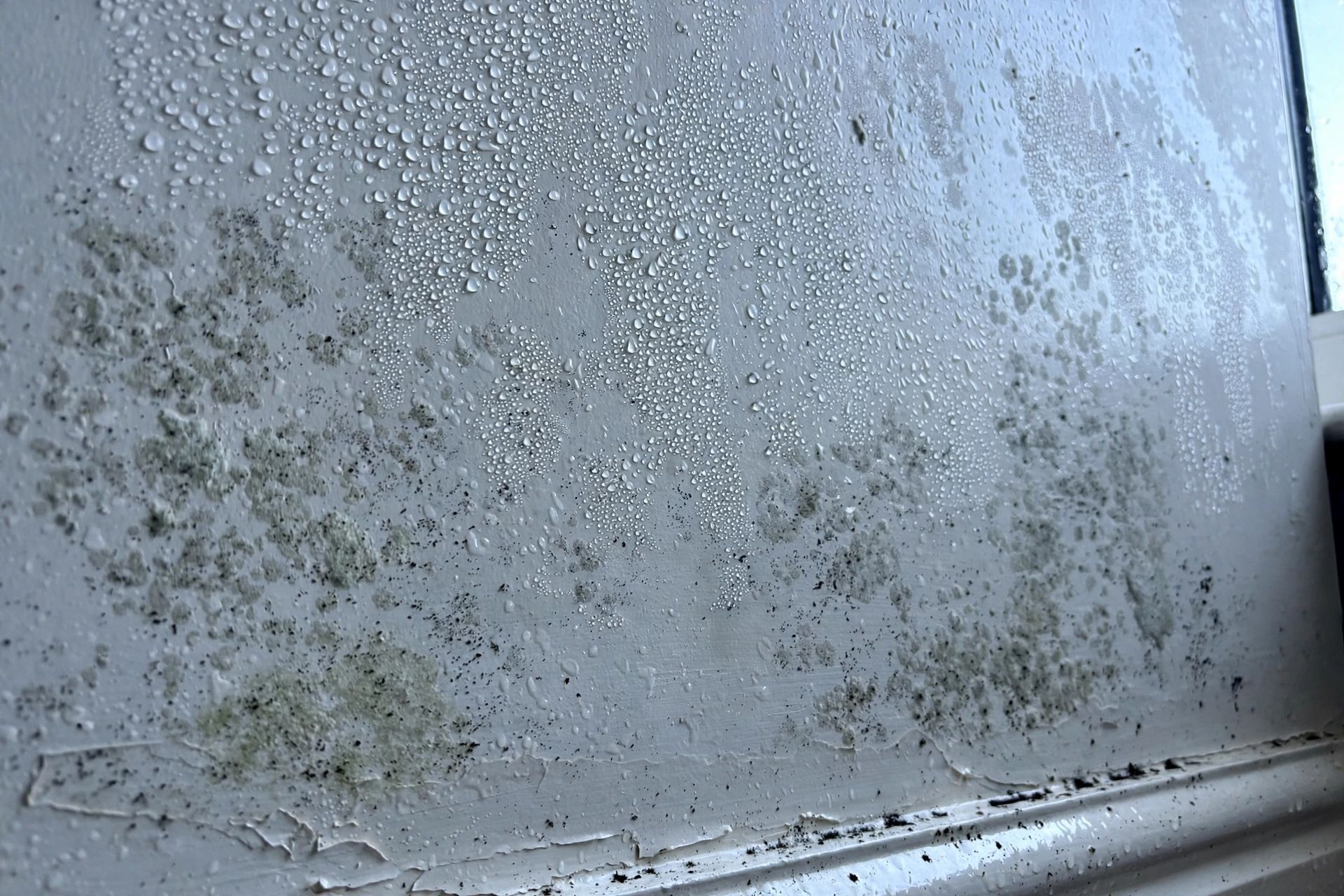
Condensation vs penetrating vs rising damp
The word “damp” can describe different problems, and they do not all have the same fix. Spray cork may form part of a solution for condensation, but it cannot replace repairs or damp-proofing where water is entering the building.
| Damp type | Can spray cork help? | What actually fixes it |
|---|---|---|
| Condensation | It can help reduce condensation on cold walls by insulating the surface. Ventilation and moisture control may also be needed. | Reduce excess indoor moisture, improve ventilation and address cold surfaces. |
| Penetrating damp | Not while the source is active. Cork is not a repair for water getting through a roof, wall or other defect. | Find and repair the source, such as failed pointing, damaged render, a roof defect or leaking pipework. |
| Rising damp | No. Cork is not a damp-proof course (DPC) and does not stop moisture rising through a wall. | Diagnose the cause and, where appropriate, repair or install a suitable DPC and address affected finishes. |
If water is coming through the building fabric, coating over it risks hiding the symptom rather than solving the problem. Fix the cause first; only then assess whether a breathable coating is suitable.
Why breathability matters
A vapour-permeable material allows water vapour to pass through it. In practical terms, a breathable wall finish is less likely to trap moisture inside the wall than a non-breathable coating. This can matter in period and solid-wall homes, where walls may rely on drying through their surfaces.
If moisture is trapped behind an unsuitable coating, plaster can become damaged or “blown”, and mould may develop. Breathability does not mean a wall is waterproof or that every damp problem will disappear. The whole wall build-up and the cause of the moisture still matter.
For traditional buildings, the right repair depends on the wall and its condition; adding a new finish without understanding those factors can make matters worse. The Historic England guidance on energy efficiency in traditional homes provides further context on taking care with older buildings and their materials.
Interior walls: cutting condensation and mould
Interior spray cork may be considered for cold, condensation-prone walls. By insulating the surface, it can help reduce the likelihood of moisture condensing there. It is not a mould treatment, however, and it will not remove the need to deal with existing mould safely or to manage indoor moisture.
Ventilation remains important. Cooking, bathing, drying clothes indoors and everyday activities add moisture to the air. Extractor fans, adequate ventilation and steady heating can help reduce the amount of moisture available to condense. The wall should also be checked for leaks or other sources of damp before a coating is selected.
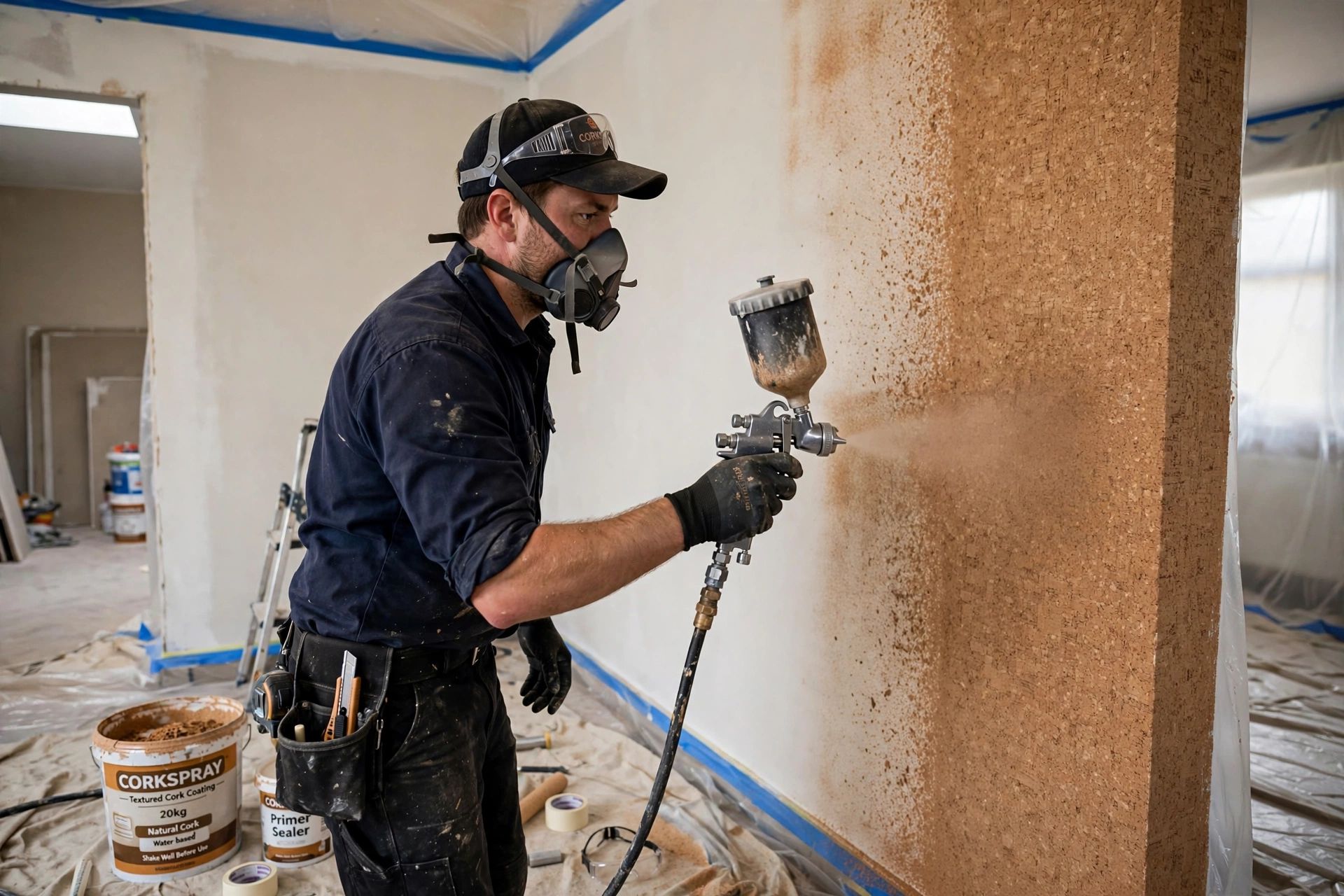
Exterior walls: keeping rain out while breathing
On suitable external walls, spray cork can provide a water-resistant finish that sheds rain while remaining vapour-permeable. This may help keep an exterior wall drier without sealing moisture inside it. It is not a substitute for sound pointing, working gutters, intact roof details or repairs to defective render.
Suitability depends on the existing finish, the condition of the substrate and the exposure of the wall. A coating should not be used to conceal cracks or unresolved water ingress. The surface needs appropriate preparation, and the coating system must be compatible with the wall beneath it.
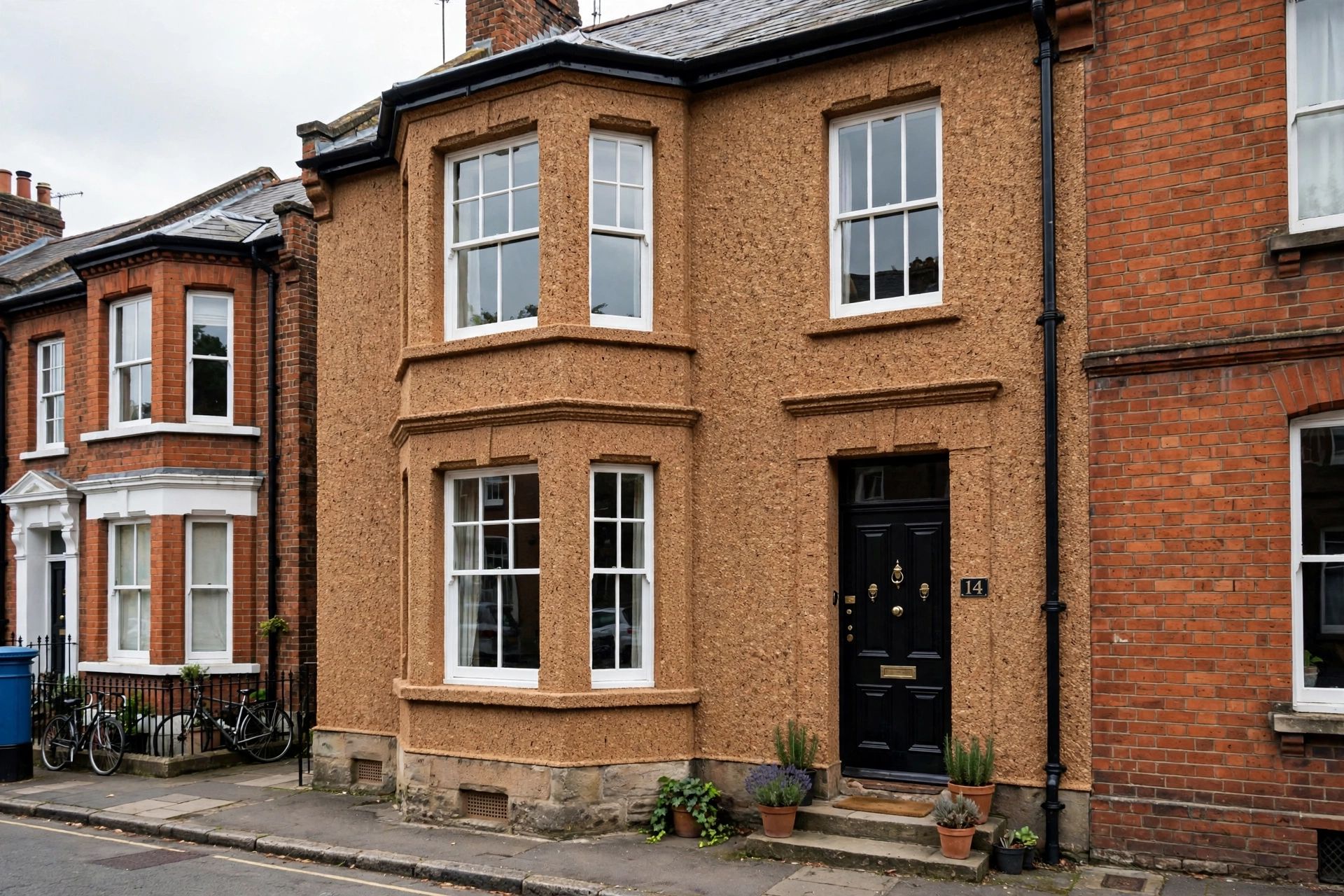
When spray cork will NOT fix your damp
Spray cork is the wrong first step if the wall is still getting wet from an unresolved source. Applied over active or structural damp, it may blister, lose adhesion or otherwise fail. A coating can also obscure signs that would help identify the underlying issue.
Must-fix-first checks include:
- Active leaks: Repair leaking pipes, roofs, gutters or other water sources.
- Penetrating damp: Fix defects such as failed pointing, damaged render, cracks or faulty roof details.
- Rising damp or a failed DPC: Establish the cause and arrange appropriate damp-proofing and restoration. Cork is not a DPC.
- Saturated walls: Find out why the wall is wet and allow suitable repairs and drying before coating it.
- Poor or unsound preparation: Remove or repair loose, failing or incompatible finishes and check that the substrate is suitable.
Cork over unresolved structural damp is not a reliable fix. It can fail because the moisture source and damaged substrate remain beneath the coating.
The right approach: diagnose first
Start by identifying whether the problem is condensation, penetrating damp, rising damp or a combination. Check the pattern and location of moisture, the condition of the wall and any likely sources such as plumbing, roof details, pointing or ventilation. A damp specialist should diagnose the damp type and check the substrate before recommending a finish.
Fix any water ingress or damp-proofing issue first. If condensation is the main problem and the wall is suitable, spray cork may then be considered as part of a breathable system, alongside sensible ventilation and moisture control. Gents Venetian Plastering & Rendering is newly offering spray cork and damp/breathable solutions in Bristol, backed by more than 50 years of combined experience in plastering and rendering. We aim to explain what a coating can and cannot do rather than present it as a cure-all.
Frequently asked questions
Does spray cork stop condensation?
It can help reduce condensation on a cold wall by insulating the surface and making it warmer, so moisture is less likely to condense there. Its vapour permeability can also allow moisture to pass through rather than trapping it behind a sealed finish. It does not remove excess moisture from the home, so ventilation and other causes still need attention.
Can spray cork stop rising damp?
No. Spray cork is not a damp-proof course and does not stop moisture rising through a wall. Rising damp needs proper diagnosis and suitable damp-proofing or repairs. Applying cork over unresolved rising damp risks coating failure and does not fix the cause.
Will spray cork cover mould?
It should not be used simply to cover mould. The cause of the moisture must be identified, and existing mould needs to be dealt with appropriately before a new finish is applied. If condensation is responsible, improve moisture control and ventilation as well as considering whether an insulating, breathable wall coating is suitable.
Is spray cork breathable?
Spray cork coatings are designed to be vapour-permeable, allowing water vapour to pass through the finish. This can help a wall dry through its surface, unlike some non-breathable coatings that may trap moisture. The performance depends on the product and the full wall build-up, so check the system specification and substrate suitability.
Can you put spray cork over a damp wall?
Not without first finding out why it is damp. If there is an active leak, penetrating damp, rising damp or a saturated wall, fix the cause and assess the substrate before coating. Cork applied over unresolved structural damp may blister or fail.
Does spray cork stop black mould returning?
It may help reduce one contributing factor if black mould is linked to condensation on a cold wall, but it cannot guarantee that mould will not return. Excess indoor moisture, poor ventilation, leaks or other damp sources can still cause mould. Address the cause, manage moisture and make sure the wall is suitable before applying a finish.
Is interior or exterior spray cork better for damp?
Neither is universally better; the right location depends on the damp type and the wall. Interior cork may help with condensation on a cold surface. Exterior cork can shed rain while allowing vapour to pass through, but it will not repair defective pointing, render or roof details. Diagnose the problem first and fix water ingress before choosing a coating.


