
Across over 60-70 plaster ceiling call-outs in the last several years, our data shows that 70% of ceiling cracks are harmless, yet on a ceiling, whether the plaster around the crack still feels firmly attached matters far more than how wide the crack is.
What Most Guides Say vs What Our Ceiling Call-Outs Show
Most online advice focuses on measuring the width of a crack. However, our diagnostic approach, backed by our analysis of why plaster cracks, shows that location and attachment are the only metrics that truly indicate structural risk. We see a consistent 70/20/10 split in our findings: 70% are cosmetic, 20% involve joint movement, and 10% are potentially serious structural detachments.
What most guides say | What our ceiling call-outs show |
|---|---|
Rank cracks by width (e.g., 2mm is bad) | Assess by attachment (e.g., is it still bonded?) |
Any crack requires a tradesperson | Hairlines are often just seasonal shrinkage |
Focuses on the crack itself | Focuses on the substrate (laths vs plasterboard) |
Why Ceiling Cracks Are Different From Wall Cracks
Ceilings face a challenge that walls do not: gravity. While a crack in a wall is often a sign of minor settlement, a crack in a ceiling can signify that the plaster has lost its mechanical bond to the joists or laths. When the bond fails, gravity works against you. If you notice hollow areas, it is frequently a sign of blown or loose plaster that needs professional evaluation. We aim to be realistic rather than alarmist—most ceilings are stable—but we prioritize checking for firm attachment above all else.
The Three Checks to Do Before You Worry
Before panicking or calling for an emergency inspection, we advise customers to perform these three safe checks:
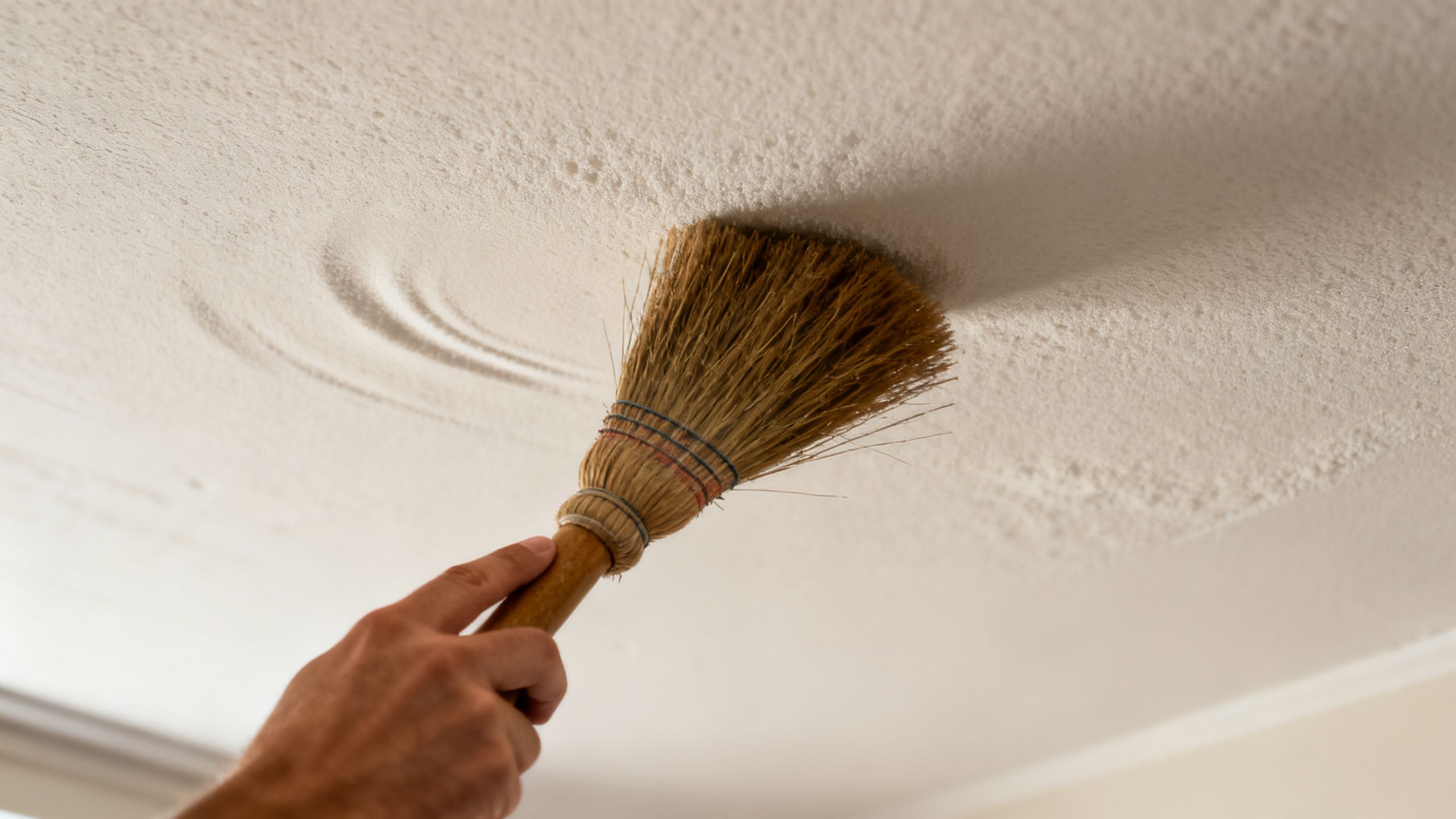
The Press Test: Gently press near the crack; if the ceiling is high, use a broom handle. You are feeling for sponginess or movement. If it feels solid, the risk of imminent danger is extremely low.
The Raking-Light Check: Shine a lamp parallel to the ceiling surface. This highlights shadows that indicate sagging or bulging that the naked eye misses in standard room lighting.
Identify the Material: Is your home pre-1950s? You likely have lath and plaster. Check our guide on lath and plaster vs plasterboard to understand the structural differences.

The 4 Most Common Ceiling Crack Scenarios and Costs
Hairline Crack on a Modern Plasterboard Ceiling
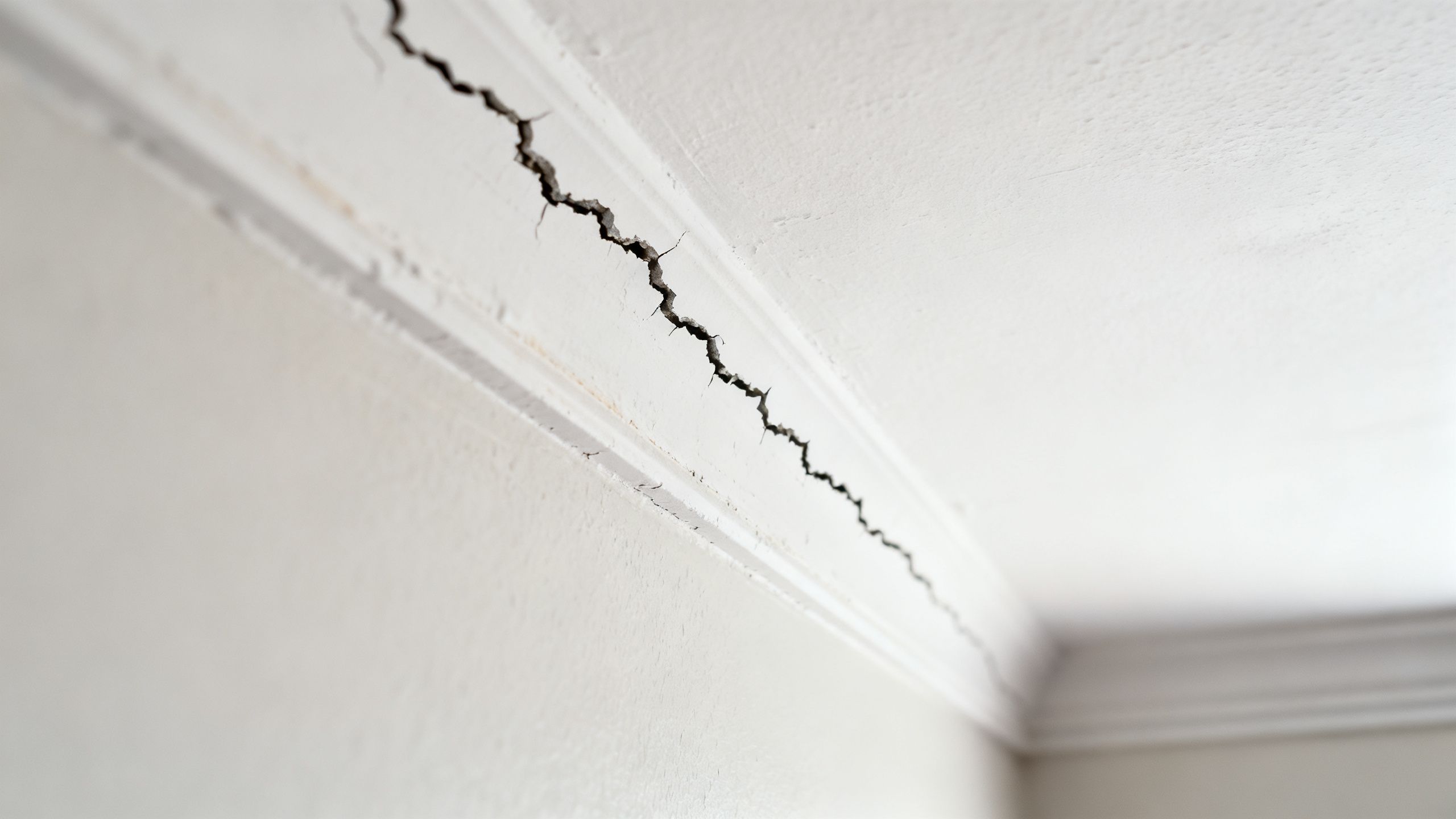
These usually result from seasonal building movement or minor skim shrinkage. If the surrounding area is solid, this is strictly cosmetic. Cost: £80-200 for filling and redecoration.
Cracking Along Plasterboard Joints
This suggests the original scrim tape has failed or was never installed correctly, causing the joint to move independently. This requires raking out, re-scrimming, and re-skimming. Cost: £150-400.
Cracking Around a Ceiling Rose or Light Fitting
Often caused by long-term stress from a heavy fitting or a minor historic leak. If there is no water staining, it is usually cosmetic but requires monitoring. Cost: £100-300.
Cracking on a Lath and Plaster Ceiling With Give or Sag
This occurs when the plaster keys (nibs) have broken away from the wooden laths behind. This presents a safety concern. We often recommend overboarding or patching. Cost: £500-2,000+. Request a quote here.
When a Ceiling Crack Is Genuinely Urgent
You should move quickly if you see any significant give, sagging, or bulging. Cracks that appear suddenly, grow rapidly, or are accompanied by water staining are red flags. While 90% of our call-outs are non-emergency, the 10% that are serious require immediate attention. If in doubt, consult the RICS guidance on structural movement.
Lath and Plaster Ceilings — The One to Watch
In Bristol and Bath, our Victorian and Edwardian housing stock frequently features lath and plaster. Over time, the plaster ‘nibs’ that wrap around the wooden laths can become brittle and snap, leading to what we call key failure. Once these keys snap, the plaster is essentially hanging by its own tensile strength. Acting sooner is wiser than waiting, as overboarding can become more difficult if the damage spreads. Refer to our detailed lath and plaster breakdown for more specific identification tips.
FAQ
Are hairline cracks in a ceiling serious? No, they are typically cosmetic related to settlement.
When should I worry about a ceiling crack? When there is visible sag, sponginess, or sudden growth in crack size.
How do I know if my ceiling is going to collapse? Perform the press test; any rhythmic movement or significant hollow sound suggests a need for an inspection.
What causes hairline cracks in a plaster ceiling? Natural material movement, temperature cycles, and plaster skim shrinkage.
Can I just paint over ceiling cracks? Yes, if it is a stable hairline crack, but it won’t resolve movement in failed joints.
Why does my ceiling crack along a straight line? This is almost always a failure of the scrim tape used during original installation.
How much does it cost to repair ceiling cracks? Prices vary from under £200 for cosmetic patches to over £2,000 for full ceiling remedial work.
Are cracks in an old lath and plaster ceiling dangerous? Only if the plaster has detached from the underlying laths; perform the press test to verify.