
"Do I need skimming or plastering?" is one of the most common questions we get from Bristol and Bath homeowners, usually because they have been quoted for one and are not sure whether they are being sold the right thing. Across thousands of both jobs, the finding is consistent: skimming is plastering, just one specific type of it, and which one your wall needs comes down entirely to the state of the surface underneath.
Skimming IS Plastering — Here's the Actual Difference
The words are often used as though they describe two separate jobs. They do not.
Plastering is the broad trade and process of preparing and finishing a wall or ceiling. It can include applying backing coats, levelling uneven masonry, repairing damaged areas and applying the final finish.
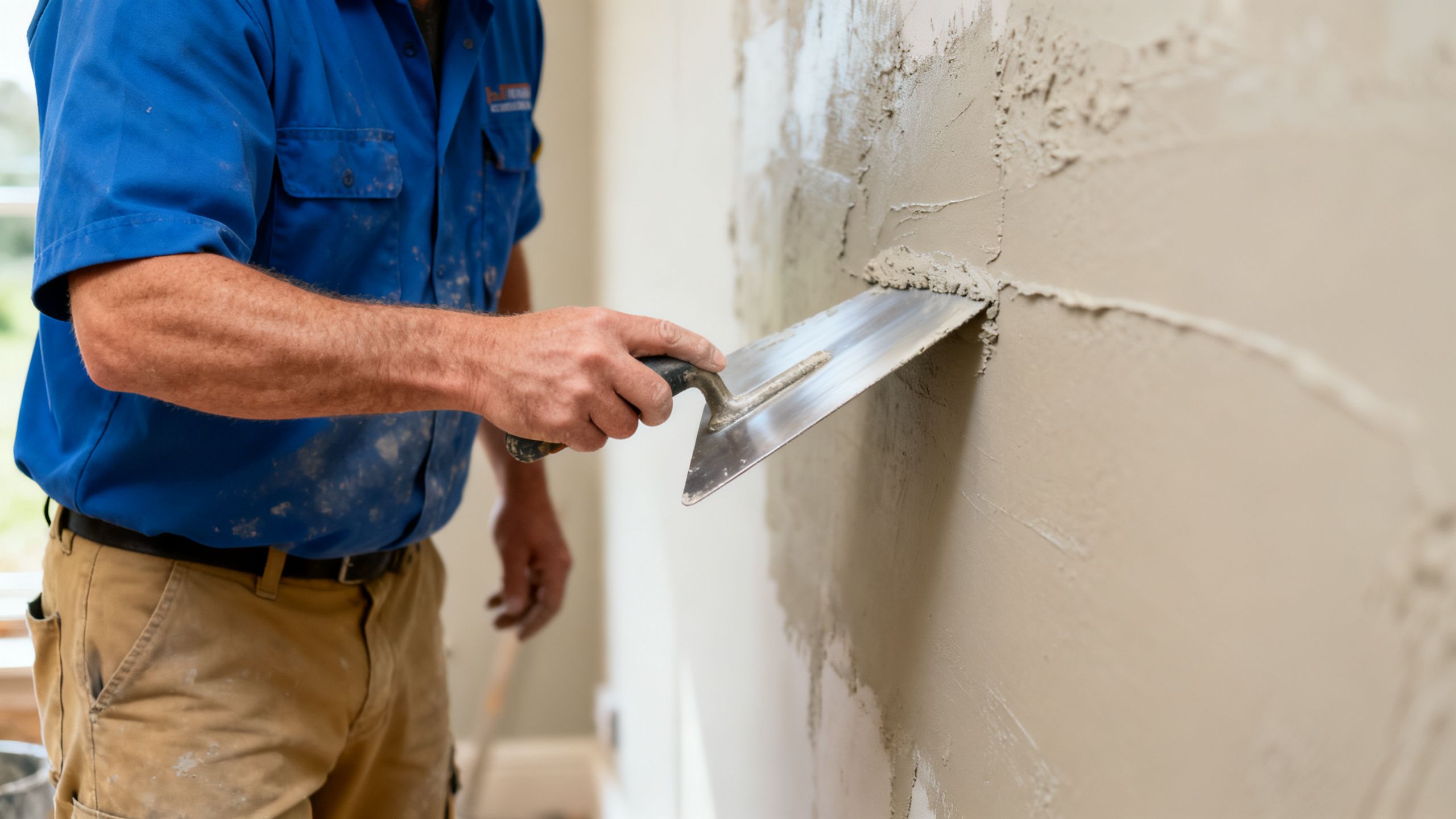
Skimming is one particular plastering technique: applying a thin final coat, usually around 2–3mm, over an existing sound surface. The skim coat smooths the wall and leaves it ready for decorating.
A full plastering job may therefore include skimming, but a skim on its own does not usually include the backing work needed for a bare or seriously damaged wall.
What people think the difference is | What it actually is |
|---|---|
Skimming and plastering are two entirely different trades. | Skimming is one type of plastering. |
The cheaper quote is always the better option. | The correct service depends on the condition of the wall underneath. |
A skim will cover any wall. | A skim needs a sound surface beneath it. |
Full plastering is always the superior finish. | Full plastering is unnecessary if the existing plaster is solid and only needs freshening. |
The visible finish tells you which job was done. | Once painted, both can look identical; the difference is what is underneath. |
That distinction matters when comparing quotes. A quotation for "plastering" might mean a simple skim, or it might mean removing loose plaster, applying bonding or hardwall and then finishing with multi-finish. Those are very different amounts of work.
For wider Bristol pricing context, our guide to the cost to plaster a room explains why room size, access, repairs and the existing surface can change the figure. The important point is not to compare two prices until you know both contractors are quoting for the same service.
What Skimming Is (and When It's the Right Job)
Skimming is the application of a thin finish coat over a surface that is already sufficiently flat, stable and sound. The material is commonly a finishing plaster such as multi-finish, applied in a thin layer and trowelled smooth.
It is often suitable for:
- Existing plaster that is solid but tired or patchy
- Minor surface unevenness
- Sound walls after wallpaper or light decorative coverings have been removed
- Plasterboard that has been correctly prepared
- Walls being refreshed before painting
- Some old textured or Artex surfaces, once their condition and any safety issues have been assessed
A skim is not intended to rebuild a wall. It can disguise minor imperfections, but it cannot compensate for movement, damp, hollow plaster or major changes in level. If the surface moves underneath, the new coat can crack with it. If the old plaster is detached, the skim may bond to a failing layer rather than to a reliable base.
On plasterboard, the joints, fixings and edges need to be prepared properly before the skim is applied. On existing plaster, loose areas may need cutting out and repairing first. A thin coat does not mean no preparation.
The material used may be described as multi-finish or finishing plaster. British Gypsum's Thistle MultiFinish product information explains its use as a finishing plaster for a range of backgrounds. The product is only part of the result, though: the background must be suitable and the application must be sound.
What Full Plastering Is (and When You Need It)
Full plastering is the complete build-up of a wall or ceiling rather than just its final surface coat.
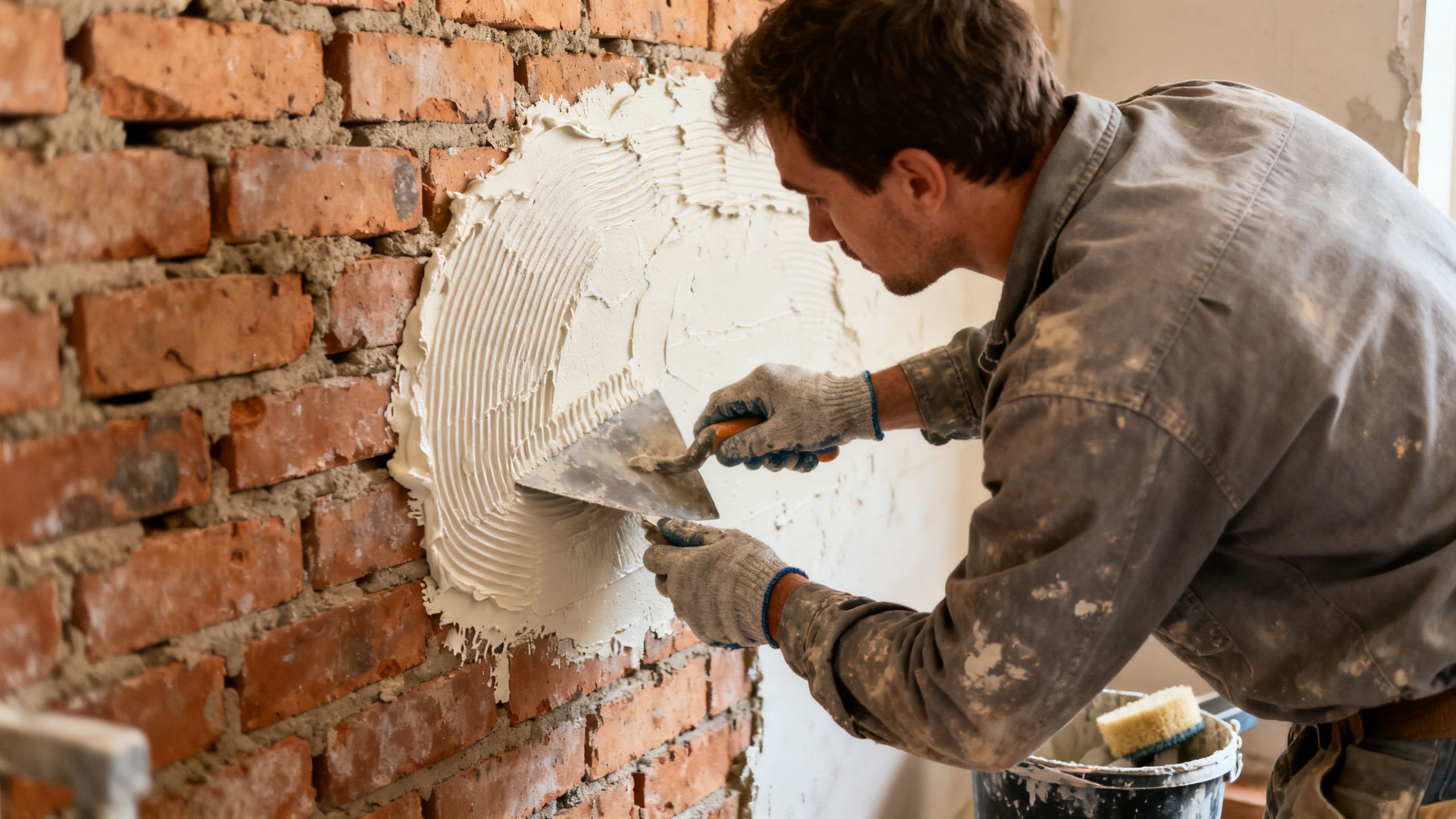
The exact system varies with the background. On bare brick or blockwork, a plasterer may first apply a bonding or hardwall backing coat to create a reasonably flat, stable base. The wall may then receive a finishing coat such as multi-finish. On a badly damaged wall, unsound sections may need removing before the new coats are built up.
A typical sequence could involve:
- Removing or cutting back blown and loose plaster.
- Cleaning and preparing the brick, blockwork or other background.
- Applying the appropriate backing coat, such as bonding or hardwall.
- Allowing the base to firm up or dry as required.
- Applying the final skim coat.
- Allowing the plaster to dry before decoration.
Full plastering is more likely to be needed for:
- Bare brick or blockwork
- Newly installed plasterboard where a complete finish is required
- Hollow or blown plaster
- Walls with significant damage or missing areas
- Surfaces that are too uneven for a thin skim to level
- Walls where the existing finish has failed because of movement or moisture
The backing coat does the structural and levelling work. The skim provides the smooth decorative finish. Applying only the second part to a wall that needs the first is a false economy.
Damp needs particular care. Plastering over a damp wall without addressing the source can trap moisture, damage the new finish and leave the underlying problem unresolved. Similarly, insulated plasterboard can alter how moisture and condensation behave within a wall. Our guide to the hidden damp and mould risks of insulated plasterboard explains why the wall construction should be considered before choosing a lining or plastering system.
Which Do You Actually Need? The Surface Test
The most useful advice we give customers is to assess the existing surface before discussing the finish or the price.
You can carry out a basic first check yourself. It does not replace a proper inspection, but it helps you understand why one quote may call for a skim while another recommends full plastering.
1. Press the wall
Press different areas with the heel of your hand. A sound wall should feel firm and stable. If the surface flexes, shifts or feels detached, it may not be suitable for a skim alone.
2. Tap across it
Tap gently with your knuckles. A consistent, firm sound is reassuring. A hollow or drummy sound can indicate blown plaster beneath the surface. Test around cracks, corners, old repairs and areas where the plaster has previously been exposed to moisture.
3. Look at what is actually there
A wall that is solid but tired, patchy or slightly uneven is often a skim candidate. A wall that is bare brick, bare blockwork, freshly boarded, badly broken or missing large sections needs more than a finishing coat.
4. Check for moisture
Look for staining, salt deposits, mould, peeling paint or a persistent cold, damp area. Do not assume that a new coat of plaster will solve these symptoms. The source may be penetrating damp, a plumbing leak, condensation or another building issue.
5. Separate minor imperfections from failure
Small dents and shallow inconsistencies are normal reasons for skimming. Crumbling plaster, wide cracks, loose patches and substantial changes in level are signs that the wall may need repairs or backing coats first.
In simple terms:
- Solid, sound, tired or slightly uneven: usually a skim.
- Bare brick or blockwork: full plastering.
- New plasterboard: normally preparation and a full finishing system, often including a skim.
- Blown or hollow plaster: remove or repair the failed areas, then rebuild and skim as appropriate.
- Damp plaster: identify and deal with the moisture before selecting the finish.
- Badly damaged or very uneven plaster: likely full plastering or substantial preparation.
That is why the wall condition, rather than the wording on the quote, should decide the service.
Are You Being Quoted the Right One?
The most common mistake is choosing between quotes on price alone. Homeowners sometimes assume skimming and full plastering are interchangeable, then choose the cheaper skim without checking whether the surface can support it. The opposite also happens: someone pays for full re-plastering when the existing plaster is perfectly sound and only needs a fresh finish.
A fair quotation should make the preparation and coating system clear. Ask the plasterer:
- Is this a skim over existing plaster, or full plastering?
- What condition do you consider the existing surface to be in?
- Have you checked for hollow or blown areas?
- Are bonding or hardwall backing coats included?
- Will damaged sections be removed and repaired, or simply covered?
- Are any damp or condensation concerns included in the assessment?
- How many coats and what type of plaster are included?
- What preparation is included around sockets, corners, windows and boards?
If the wall is genuinely sound, you should not be talked into full re-plastering that adds cost without solving a problem. If the wall is not sound, a cheap skim over the top will not make it sound. It can crack, detach or fail because the defect remains underneath.
At Gents Venetian Plastering & Rendering, we carry out both skimming and full plastering across Bristol and Bath. With more than 50 years of combined experience, our advice is based on the surface condition rather than automatically recommending the more expensive option. You can contact us about your plastering or skimming requirements and ask for the wall to be assessed before deciding.
The warning sign is not simply a high or low price. It is a vague quote that does not tell you what happens to the existing surface.
What Each Costs and How Long It Takes in Bristol
As a rough Bristol guide, skimming an average room is often around £350–£500. Full plastering from bare brick, blockwork or newly boarded walls is more commonly around £500–£800 or more.
These are guide figures, not fixed prices. Room size, ceiling height, access, the number of corners and reveals, removal work, repairs, waste, materials and drying conditions can all affect the final cost. A small room with difficult access may cost more than a larger straightforward room.
Factor | Skimming | Full plastering |
|---|---|---|
What it involves | A thin 2–3mm finish coat over a sound prepared surface | Preparation, backing coats such as bonding or hardwall, then a finishing skim |
Typical Bristol guide | Around £350–£500 for an average room | Around £500–£800+ from bare or newly boarded surfaces |
Materials and labour | Less material and fewer labour stages | More materials, coats, preparation and labour |
Drying time | Often ready for decoration in days, depending on conditions | Longer because backing coats and the finish need to dry properly |
Best suited to | Sound but tired, patchy or slightly uneven surfaces | Bare, damaged, blown, hollow, damp-affected or very uneven surfaces |
Finished appearance | Smooth and ready for decoration | Smooth and ready for decoration |
The finished wall can look identical once painted. That does not mean the jobs were identical. The price difference is largely in what had to be done underneath the visible finish.
Skimming is not automatically cheap if extensive preparation is required first. Equally, full plastering is not automatically better if the original surface is already sound. For a more detailed explanation of drying, curing and scheduling, see our guide to how long plastering takes. The practical lesson is to allow time for the actual plaster system to dry rather than decorating as soon as the surface feels firm.
FAQ
Is skimming the same as plastering?
No, but skimming is a type of plastering. Plastering describes the wider process of preparing and finishing walls and ceilings. Skimming specifically means applying a thin final coat, usually 2–3mm, over an existing sound surface.
A full plastering job may include backing coats followed by a skim. A skim-only job normally does not rebuild a bare, damaged or unstable background.
What is the difference between skimming and plastering?
Skimming is the finishing stage: a thin coat of plaster is applied to smooth a suitable existing surface. Full plastering can include preparation, repairs, bonding or hardwall backing coats and the final skim.
The difference is therefore not two unrelated services. It is the scope of the plastering work and the condition of the wall receiving it.
Do I need skimming or plastering?
Press and tap the wall. If it is solid, sound and only tired, patchy or slightly uneven, it may need skimming. If it is bare brick or blockwork, newly boarded, hollow, blown, damp or badly damaged, it is more likely to need full plastering or substantial preparation before a skim.
The advice we give customers is to decide from the surface condition, not from which service sounds cheaper.
How much does skimming cost compared with plastering?
As a rough Bristol guide, skimming an average room may cost around £350–£500. Full plastering from bare or newly boarded surfaces may be around £500–£800 or more.
The exact figure depends on room size, access, preparation, repairs, materials and the number of coats. A quotation should state whether it includes only a skim or the backing and preparation needed for full plastering.
Can you skim over a bare wall?
Not normally. A skim coat is only around 2–3mm thick and is not intended to level or build out bare brick or blockwork. The wall generally needs an appropriate backing coat, such as bonding or hardwall, before the final skim.
Skimming directly onto a bare wall can produce poor coverage, unevenness, weak adhesion and an unsuitable finish.
How thick is a skim coat?
A typical skim coat is approximately 2–3mm thick. It is a finishing layer rather than a method of substantially levelling a wall.
If a wall needs significant filling or levelling, the plasterer may need to use a backing coat first. Trying to achieve the same build-up with finishing plaster alone is not the correct system.
How long does skimming take to dry?
A skim can often be ready for decoration in a few days, but the exact time depends on thickness, ventilation, temperature, humidity and the condition of the building.
The colour of the plaster is a useful guide: dark or patchy areas generally indicate remaining moisture. Avoid sealing or painting the wall too early, as this can affect the finish and drying process.
Can you skim over old plaster?
Yes, provided the old plaster is sound, clean and suitably prepared. Loose, hollow, blown or damp areas must be dealt with first. The surface may also need cleaning, sealing or priming so the new plaster bonds correctly.
A skim over old plaster is often the right way to refresh a solid but tired wall. It is not the right way to conceal plaster that is already failing.
Is skimming cheaper than plastering?
Usually, yes. Skimming uses less material and involves fewer stages, so it commonly costs less than full plastering. That is why an average Bristol skim may be around £350–£500, while full plastering from a bare or boarded background may start closer to £500–£800 or more.
However, a skim is only cheaper when the wall is suitable. If repairs and backing coats are needed, they should be included rather than omitted to make the quote look lower.
How do I know if my wall needs skimming or replastering?
Look for movement, hollow sounds, crumbling areas, major cracks, damp staining and missing plaster. These indicate that the existing surface may not be a reliable base. Bare brick, blockwork and new plasterboard also need more than a simple skim-only approach.
If the wall is firm and its defects are mainly cosmetic, skimming may be sufficient. Across the thousands of skimming and plastering jobs we have completed in Bristol and Bath, the most reliable rule remains the same: press and tap the wall, assess the surface honestly, then choose the service. A sound wall needs no unnecessary full re-plastering; an unsound wall will not be fixed by a cheap skim.