
Across 60-70 render crack call-outs in Bristol and Bath, 65% were purely cosmetic — and the most reliable first check isn’t measuring the crack, it’s the tap test.
What Most Guides Tell You vs What Our Call-Outs Show
Most DIY guides focus on the width of a crack, categorizing them into a 3-tier system of hairline, medium, or stair-step. While width provides a starting point, it often misses the most critical indicator: the integrity of the bond between the render and the substrate. Our experience shows that a wide crack can sometimes be stable, while a hairline crack might hide a significant area of blown render repair.
What most guides say | What we’ve found across 60-70 call-outs |
|---|---|
Focus on crack width (hairline vs structural) | Focus on sound (hollow vs solid) |
3-tier system determines urgency | 65/35 split between cosmetic and underlying failure |
Patching is the standard first step | Patching can trap moisture if the render is blown |
The Tap Test: How to Tell in 30 Seconds If Your Crack Is Serious
We tell every customer who calls about a render crack to do the tap test before they do anything else. Use a coin or your knuckle to tap in a 30cm radius around the crack. Listen for a hollow, papery sound versus a solid, dull thud. If the area sounds solid, the crack is likely cosmetic and low priority. If it sounds hollow, the render has delaminated from the wall. Stop immediately—do not patch it yourself, because sealing a blown area traps moisture and accelerates the damage. For professional assessment, you can contact us for a quote.
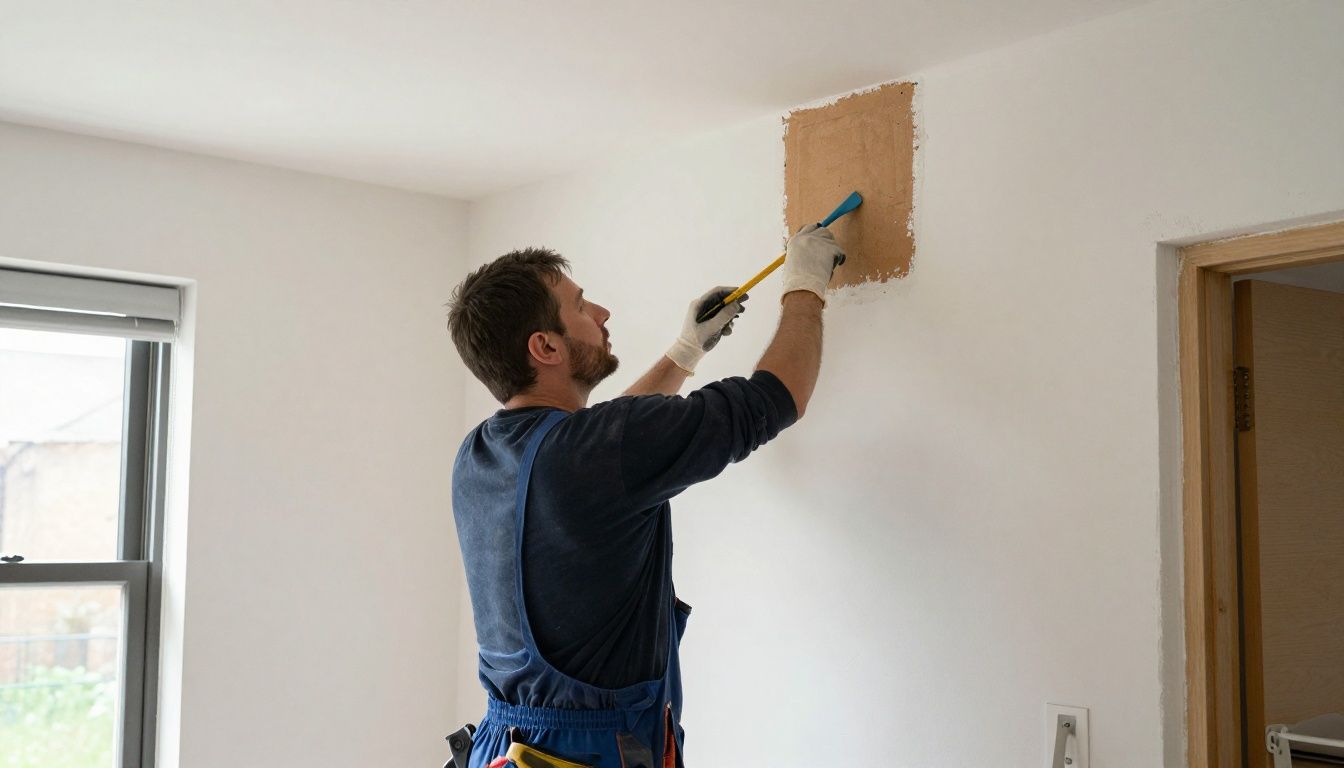
The 4 Causes Behind Render Cracks That Actually Need Attention
Blown or Delaminated Render Beneath the Crack
This occurs when the render has separated from the substrate, creating a void. It sounds hollow when tapped. Patching this is a mistake because it seals moisture inside the void, causing the render to pop off in larger sections later. Proper repair requires removing the loose material and re-rendering the area.
Incompatible Render Layers
Applying a modern, cement-rich patch over an older, softer lime-based mix creates a mismatch in strength and flexibility. The newer layer moves differently than the old, leading to differential movement and cracking. Identifying this requires checking the history of the property and the hardness of the existing finish.
Missing or Failed Expansion Joints
On larger elevations, thermal movement is inevitable. If expansion joints are missing or have failed, the render has nowhere to go as it expands and contracts with the Bristol climate. This results in cracks at the weakest points. We often recommend installing or repairing these joints to prevent recurring issues.
Structural Movement
While rare, this is the most serious cause. It is usually identifiable by a stair-step pattern along mortar joints or cracks that reappear shortly after being patched. If you suspect this, you should consult RICS structural guidance to determine if a structural engineer is required before hiring a renderer.
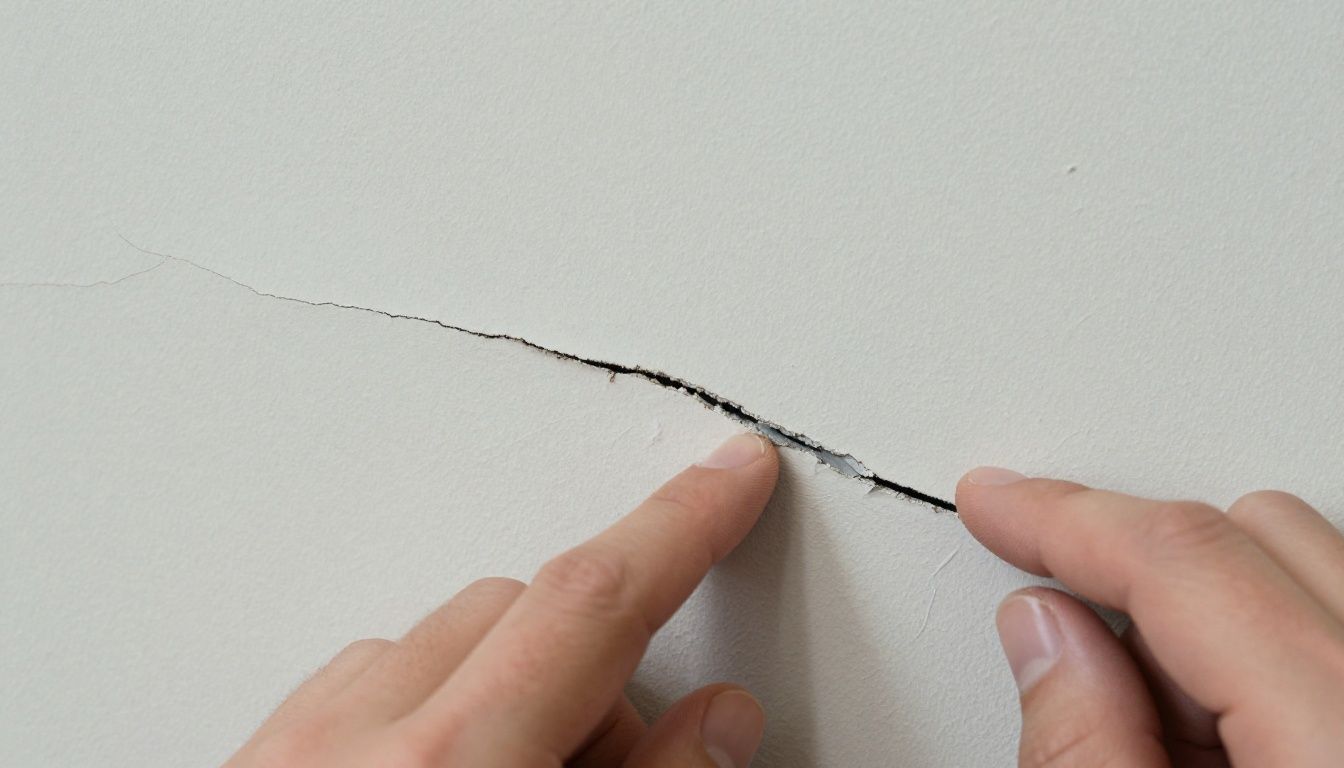
When Is a Render Crack an Emergency?
Not all cracks require immediate action, but 35% of the cases we see do. Watch for cracks appearing above doorways or windows, as these can indicate a safety risk if the render is loose and likely to fall. Internal damp appearing on the wall opposite the crack is another red flag. If you notice a crack widening visibly over a few weeks or following a stair-step pattern, treat it as a priority.
What Does a Professional Render Crack Survey Actually Involve?
A professional survey takes 20-30 minutes. We perform a visual inspection, a full-elevation tap test to identify hidden delamination, and an internal damp check. We provide an honest assessment of whether the issue is cosmetic or requires professional render services. We do not charge for surveys on jobs we are subsequently hired to complete.
What Render Crack Repair Typically Costs
Repair type | Typical cost | Typical time | Notes |
|---|---|---|---|
Cosmetic hairline | £150 – £300 | 1 day | Flexible sealant or paint |
Blown render patch | £400 – £800 | 2-3 days | Requires removal and re-render |
Structural/Expansion | £1,000+ | 3+ days | May require structural input |
FAQ
How do I know if my render crack is serious?
Perform the tap test. If it sounds hollow, it is serious. If it sounds solid, it is likely cosmetic.
What does the tap test involve?
Use a coin or knuckle to tap in a 30cm radius around the crack. A hollow sound indicates the render has separated from the wall.
Can I fill render cracks myself?
Only if the area around the crack is solid. If it sounds hollow, filling it will trap moisture and cause more damage.
Why do render cracks keep coming back after patching?
Usually because the underlying render is blown or there is an issue with expansion joints that hasn’t been addressed.
Is a hairline crack in render dangerous?
Usually no. Most are caused by surface shrinkage or minor thermal movement.
What causes stair-step cracks in render?
These often indicate structural movement in the wall behind the render, which requires professional investigation.
How much does render crack repair cost UK?
Costs vary based on the extent of the damage, ranging from simple cosmetic fixes to full-section replacements.
Should I be worried about cracks around windows in render?
Yes, these are common areas for stress. Check them with the tap test to see if the render has blown.