
You're stripping wallpaper, a chunk of plaster comes away with it, and suddenly you're picturing the whole room being replastered. Across the Bristol and Bath homes we're called to after exactly this, the answer is almost always no: small, superficial patches are normal and usually just need filling.
First: Don't Panic — Why This Usually Isn't Serious
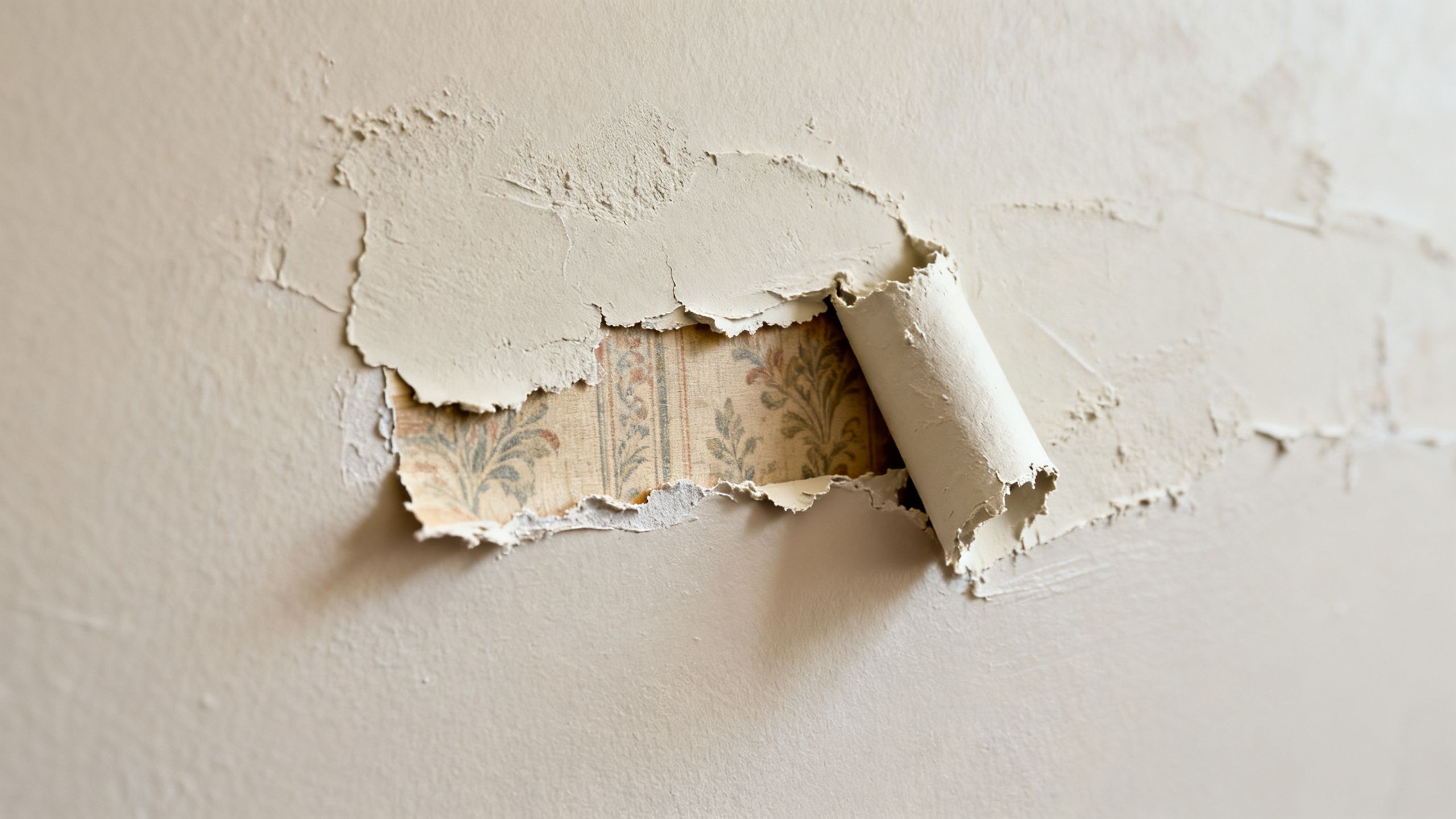
Old wallpaper can be surprisingly well bonded to the surface beneath it. When you pull it away, it may take a thin layer of skim, old distemper or paper backing with it. That can look dramatic, particularly when the exposed patch is a different colour from the surrounding wall, but it does not automatically mean the plaster has failed.
In older Bristol and Bath homes, this is especially common. Walls may have been papered and painted several times, with layers of size, wallpaper paste and distemper building up over decades. The original skim may also be thin or less firmly bonded than a modern finish.
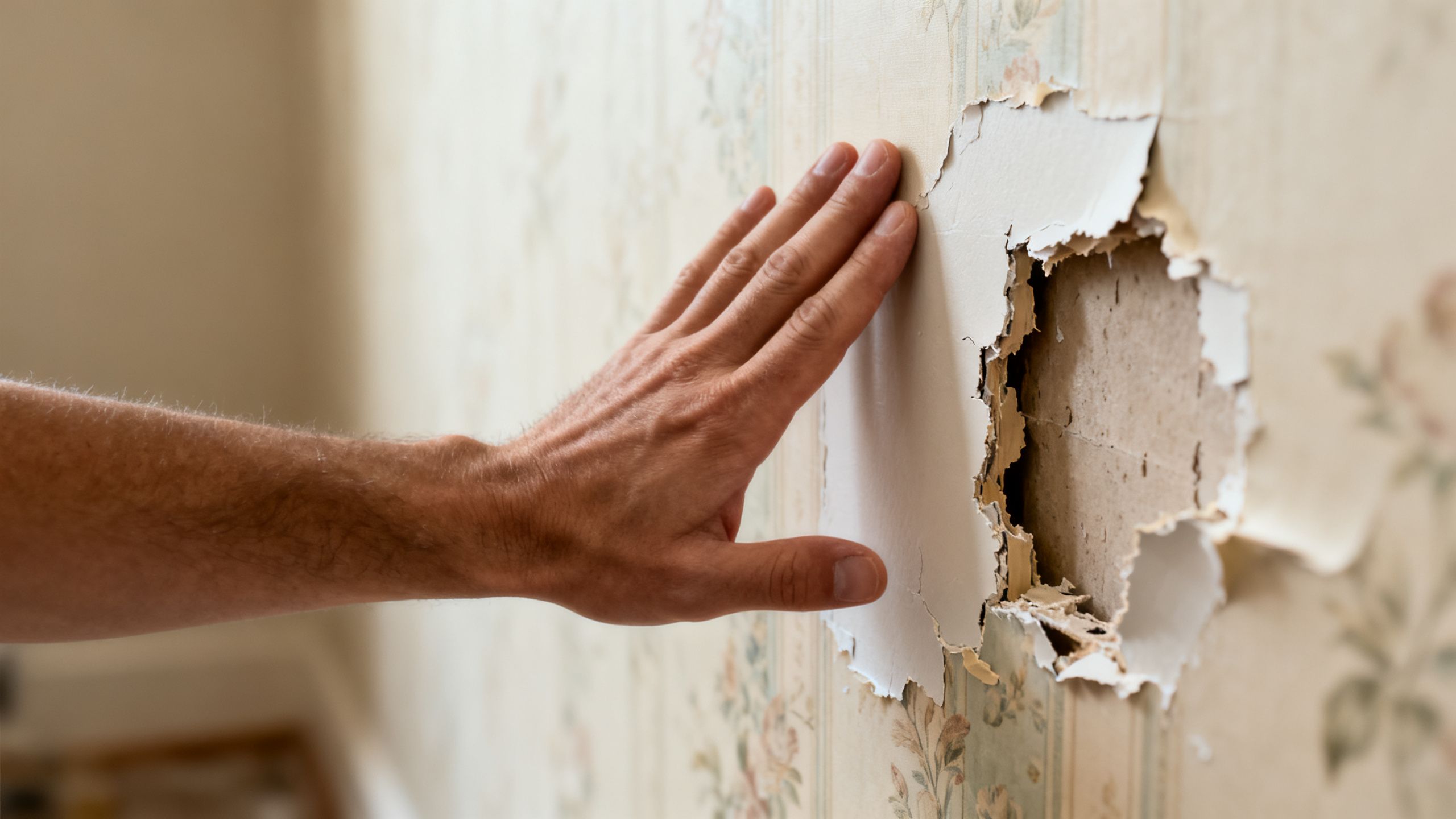
The usual pattern is a shallow patch with a firm surface underneath. If the surrounding wall is hard, does not move when pressed and sounds solid when tapped, you are generally looking at a preparation job rather than a full replaster.
The same basic distinction applies when assessing skimming versus plastering: the existing surface determines what work is needed, not the fact that some material came away during stripping.
At Gents Venetian Plastering & Rendering, we have more than 50 years of combined experience and have been called to plenty of these situations. Most are honest-to-goodness fill jobs, not whole-room replastering jobs.
Why Plaster Comes Off With Wallpaper
Several things can cause plaster or skim to come away with wallpaper:
- Old wallpaper paste or size: Size is a glue-like preparation applied before wallpapering. If it has bonded strongly to a thin skim, removing the paper can pull the skim away too.
- Distemper beneath the paper: Old distemper can soften with moisture and may have a weak bond to the plaster below. It can come away in flakes or leave a powdery surface.
- A thin or poorly bonded original skim: Some older walls have a skim that was never firmly attached, or that has weakened over time. Wallpaper removal simply reveals the problem.
- A steamer forcing water into the wall: Steam softens the paste, but it can also drive moisture into old plaster. This is more of a risk with lime plaster and older, absorbent backgrounds.
- Genuinely blown or deteriorated plaster: Sometimes the wallpaper is not the real cause. It has merely been holding loose plaster in place. That plaster may already be hollow, soft or detached from the background.
The key is not how large the first peeled patch looks. Check what the wall around it is doing before deciding on filler, lining paper or a re-skim.
Stop and Check: Is It Superficial or Blown?
The most useful advice we give customers is to carry out a simple tap test before doing anything else.
Signs it is probably superficial
A patch is usually cosmetic when:
- It is small and shallow.
- The exposed surface is firm rather than powdery or soft.
- The plaster around it feels hard when pressed.
- The surrounding wall sounds solid when tapped.
- The material came away cleanly with the wallpaper, leaving a stable surface.
You may still need to fill a dip, seal a powdery area or smooth a rough edge, but this is normally manageable preparation work.
Signs of blown plaster
Take the problem more seriously if:
- Large areas are coming away rather than isolated patches.
- The wall sounds hollow or drummy when tapped.
- The plaster feels soft, crumbly or damp.
- More material falls away when you press lightly around the edge.
- Plaster comes off in thick chunks rather than as a thin surface layer.
- The same area remains dark or wet after the rest of the wall has dried.
A drummy sound suggests that the plaster may have detached from the background. It does not prove the whole wall needs removing, but it means filling the visible hole alone may not last.
For a small, sound patch, a suitable repair filler is usually enough. Follow the manufacturer's guidance, such as the preparation advice provided by British Gypsum, and avoid filling over loose dust or moving plaster.
Should You Stop Steaming?
Yes, if plaster is coming away as you steam, stop steaming that section.
A steamer can be useful on firmly bonded modern wallpaper, but it can also force water into old plaster, soften distemper and weaken the bond between a skim and its background. Lime plaster is particularly absorbent, so prolonged steaming can pull more of the surface away.
Switch to a slower method:
- Score or perforate the wallpaper lightly if appropriate.
- Apply warm water by hand with a sponge or spray bottle.
- Add a small amount of washing-up liquid to help the water penetrate the paste.
- Leave it for a few minutes to soak through.
- Lift the paper gently with a scraper rather than levering aggressively against the plaster.
Work in small sections. If the surface starts coming away, stop stripping that area and reassess it with the tap test. Continuing to steam will not make a loose surface sound; it may simply expose more of it.
What to Do — Fill, Lining Paper, or Skim?
The right repair depends on whether the wall is sound, how much surface has been lost and the finish you want. The cost drivers are mainly the total area, the depth of the damage, whether the plaster is blown or damp, and whether the whole wall needs to look flawless.
1. Small, superficial patches: fill them
For shallow holes or edges where the skim has lifted, remove loose material, brush away dust and apply a suitable filler in thin coats. Let it dry fully, sand it flush and remove the dust before priming and decorating.
Do not simply smear filler over a loose edge. Feather the repair into the sound surrounding plaster so it does not leave a visible ridge beneath paint.
2. A rough but sound wall: skim or use lining paper
If the wall is solid but has lots of minor dents, scratches or uneven patches, you have two options.
A re-skim gives the best painted finish, particularly where strong side lighting will show imperfections. Lining paper can hide minor cosmetic unevenness on a sound wall and may be the quicker decorating route.
Lining paper is not a repair for blown, damp or crumbling plaster. It can disguise a problem temporarily while the loose material continues to fail underneath.
3. Widespread but sound skim loss: re-skim the wall
If wallpaper removal has left a large area uneven but the underlying plaster is firm, a plasterer may be able to prepare the surface and apply a new skim. This is different from stripping and replacing the entire wall: the background remains, while the damaged finish is renewed.
A re-skim is often the sensible choice where you want a consistent finish across a full wall rather than trying to blend numerous filler repairs.
4. Blown, damp or crumbling plaster: investigate properly
Where the wall is hollow, damp or breaking down, remove or stabilise the failed material and check why it happened. Possible causes include penetrating damp, a leak, condensation, salt damage or a failed bond between coats.
The repair may involve proper plastering rather than surface filling. On an older solid-wall property, the plaster type matters too; using the wrong material can create future moisture problems. Our guide to lime plaster versus gypsum plaster explains why the background and construction of the wall should be considered before replastering.
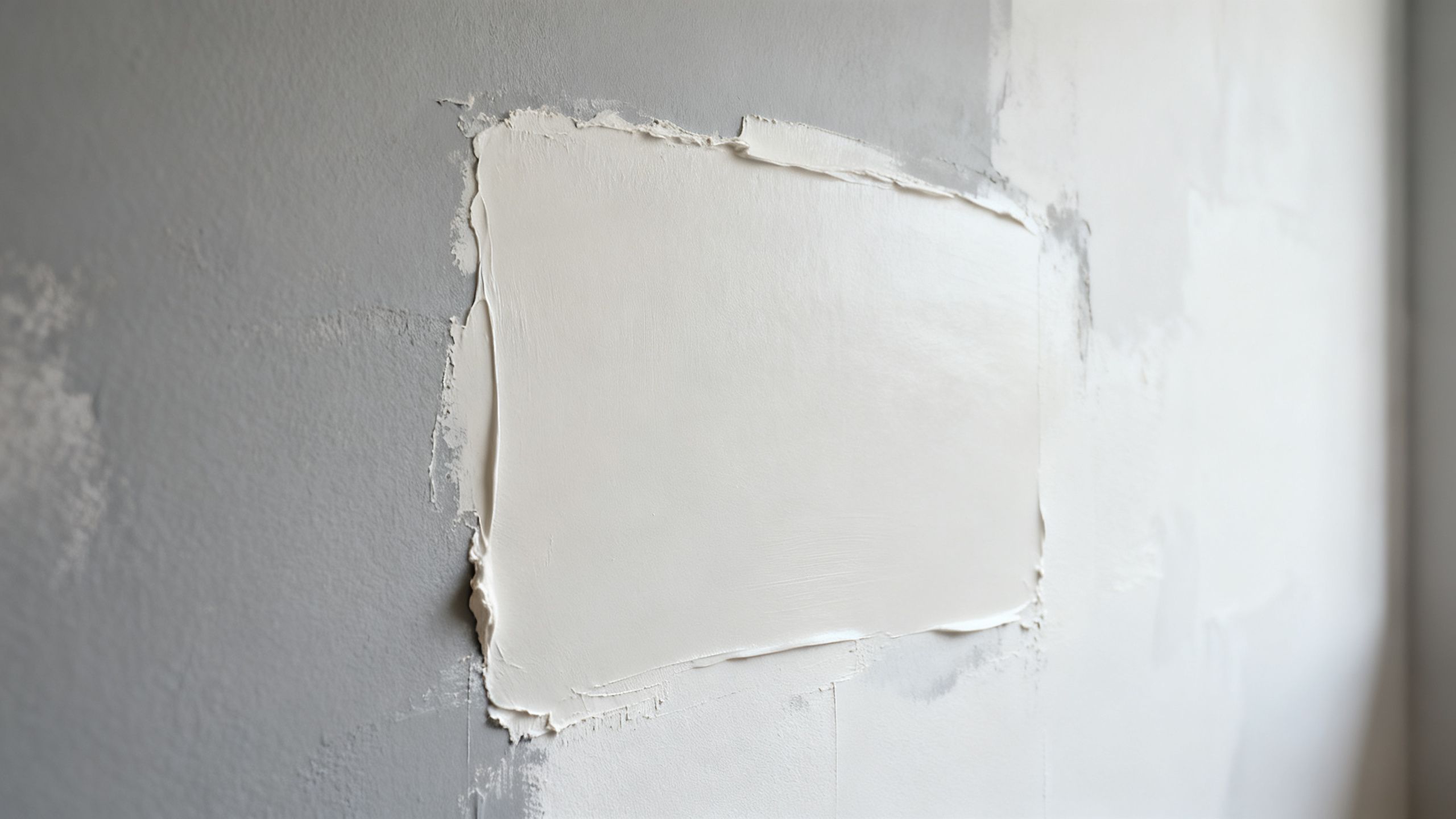
One practical point from the drying questions we regularly receive: colour is more useful than the calendar when judging whether a new plaster or filler repair is ready for decoration. Fresh plaster can remain pink, brown or patchy for days or weeks depending on thickness, ventilation and the season. Do not paint over areas that are still visibly dark or damp. Allow normal airflow, but do not point a heater directly at the wall.
When You Actually Do Need a Plasterer
Most small patches after wallpaper removal are DIY fill jobs. You are more likely to need a plasterer when:
- Large areas sound hollow or are visibly moving.
- The plaster is damp, soft or crumbling.
- The damage keeps spreading as you strip the paper.
- You cannot identify whether the wall is sound.
- You want a flawless finish across a complete wall or room.
- The property has lime plaster or other older construction that needs careful matching.
A plasterer can assess the wall, separate superficial skim loss from blown plaster and advise whether filling, local repair or a full re-skim is appropriate. If you want a second opinion in Bristol or Bath, you can contact Gents Venetian Plastering & Rendering for a quote.
FAQ
Is it normal for plaster to come off with wallpaper?
Yes. A thin layer of skim, old distemper or paper backing can come away with wallpaper, especially in older Bristol and Bath homes. It is usually normal when the patches are shallow and the surrounding plaster is hard and solid. The fact that plaster came away does not, by itself, mean the wall needs replastering.
Does plaster coming off with wallpaper mean I need to replaster?
Usually not. Small, firm-edged patches can normally be filled, sanded, primed and painted. A re-skim becomes more suitable when the skim loss is widespread, the surface cannot be blended neatly, or you want a consistently smooth finish over the whole wall. Blown, damp or crumbling plaster needs more than cosmetic filling.
Why does plaster come off when I strip wallpaper?
Old wallpaper paste or size may be bonded more strongly to the skim than the skim is bonded to the wall. Distemper can also soften and release, while an old skim may already have a weak bond. Steam and excess water can worsen the problem by softening the paper layers and the plaster surface.
Should I stop steaming if plaster is coming off?
Yes. Stop steaming that section and switch to warm water applied by hand, with a small amount of washing-up liquid if needed. Let the water soak into the paper before lifting it gently. Continuing to steam can drive more moisture into old or lime plaster and pull away additional surface material.
How do I fix plaster that came off with wallpaper?
First remove loose fragments and dust, then check that the surrounding plaster is firm. Fill a shallow, stable patch in thin coats with a suitable filler, allow it to dry, sand it flush and prime before decorating. If the patch is deep, hollow, damp or still crumbling, it needs assessment rather than simply another layer of filler.
Can I just paint over patches where plaster came off?
Not successfully in most cases. Paint will not level a dip and may highlight the repair. It is better to fill, smooth and prime first. Also wait until the filler and any new plaster are fully dry. As our drying guidance to customers makes clear, a uniform pale colour is a better signal than a fixed number of days; dark, damp areas should not be sealed with paint.
Can I use lining paper over damaged plaster?
Only if the plaster is sound and the damage is minor and cosmetic. Lining paper can hide small imperfections, but it will not fix blown, damp or crumbling plaster. Loose material may continue failing underneath and eventually cause the lining paper to blister or detach.
How do I know if my plaster is blown or just superficial?
Use the tap test and press gently around the patch. Superficial damage normally leaves a hard surface and a solid sound. Blown plaster often sounds hollow or drummy, feels soft or crumbly, comes away in thicker chunks or shows dampness. As we tell customers, the condition of the surrounding wall matters more than the appearance of one isolated patch.
Does steaming wallpaper damage plaster?
It can, particularly when used for too long on old, absorbent or lime plaster. Steam may soften distemper and drive water into the wall, weakening an already poor bond. It does not always cause damage, but if plaster starts lifting, stop using the steamer and soak the paper by hand instead.
How much does it cost to repair or reskim a wall after wallpaper removal?
There is no single price because the cost depends on the size and number of patches, the depth of the repair, access, preparation, whether the plaster is blown or damp, and whether you need a local fill or a full re-skim. A few small superficial patches are usually inexpensive DIY repairs. A whole-wall re-skim costs more because it includes preparation, materials, application and drying time. Persistent damp or failed plaster can add investigation and remedial work. For a realistic figure, the wall needs to be assessed rather than priced from the fact that wallpaper pulled some plaster away.