
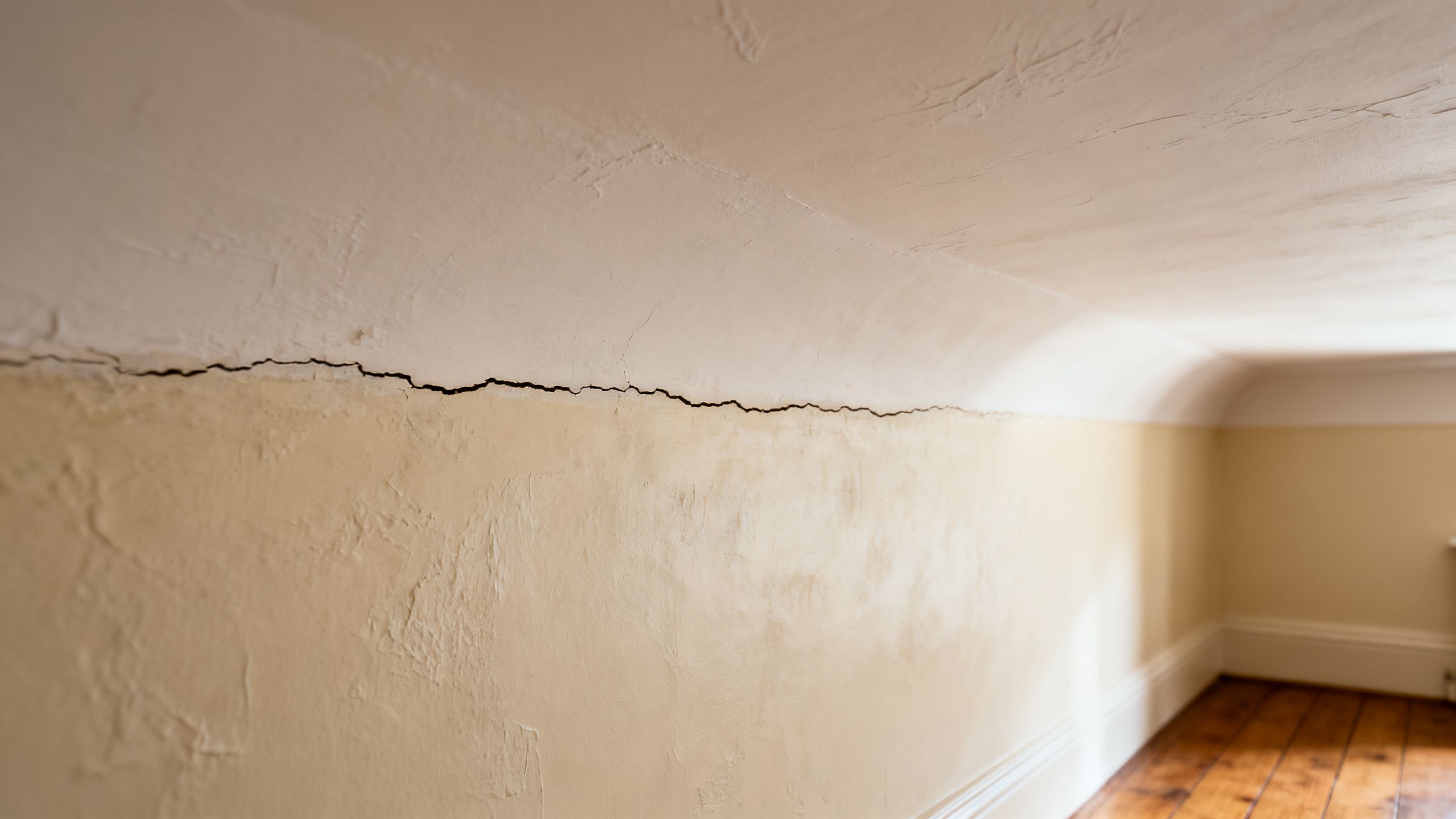
A hairline crack where the wall meets the ceiling that keeps coming back every time you fill and paint it is one of the most common and most misunderstood cracks in a house. Across Bristol and Bath, we've seen it in everything from Victorian lath and plaster to modern new builds — and the explanation is usually movement, not subsidence, so the answer is not a better filler but a repair that works with the joint.
Why This Crack Keeps Coming Back
The wall and ceiling are not one solid, motionless structure. They are two separate surfaces, often made from different materials and supported in different ways.
The ceiling is fixed to joists. It can flex slightly as the joists move, as the building responds to temperature and humidity, and as the weight in the loft changes. The wall below behaves differently. Even small amounts of independent expansion, contraction and deflection are enough to open a fine line where the two surfaces meet.
That junction is effectively a movement joint. It may look like a defect, but some movement there is normal. When a rigid powder filler or ready-mixed repair compound is pushed into the gap, it bridges the two surfaces with a material that cannot stretch. The wall and ceiling continue to move, while the filler tries to remain fixed. Eventually, the filler loses that argument and cracks along the same line.
This is why the recurring crack can return within weeks or months, even when the original repair was neat and well prepared. The problem is not necessarily poor workmanship or an inferior brand of filler. The repair material is simply being asked to do the wrong job.
We have seen the same pattern across plenty of recurring junction cracks: fill, sand, paint, repeat. Our guide to understanding the difference between skimming and plastering explains why identifying the condition and behaviour of the existing surface matters before choosing a finish.
Is It Serious? Junction Cracks vs Subsidence
A straight, fine, horizontal crack running neatly along the wall-ceiling junction is almost always cosmetic movement rather than subsidence. It is one of the most commonly over-interpreted cracks we see in Bristol and Bath homes.
That does not mean every crack should be dismissed. It means the pattern matters. A simple junction crack normally follows the ceiling line, remains narrow and does not come with other changes to the building. It may become more visible after decorating, during colder or wetter weather, or when the central heating and humidity levels change.
Subsidence-related cracking tends to present differently. Warning patterns can include:
- A crack wider than around 5mm, particularly if it is getting wider quickly.
- Diagonal or stepped cracking through brickwork, plaster or around openings.
- Cracks that continue down from the ceiling line and travel through walls, rather than staying at the junction.
- Doors or windows that have recently started sticking without another obvious explanation.
- Several connected cracks appearing in different parts of the building.
- Horizontal cracking near the tops of walls, which can point to roof spread or movement in the roof structure.
A fine line at the wall-ceiling junction on its own does not justify a subsidence panic or an unnecessary structural survey. Photograph it, measure its width, and monitor it if you are uncertain. If it is wide, rapidly changing or accompanied by the symptoms above, arrange a professional assessment. Our guide to lime plaster and gypsum plaster also covers how different plaster systems behave in older solid-wall properties.
Why Filler and Caulk Keep Failing
The most common mistake is treating a movement-joint crack as a filling problem and doing the same repair more forcefully each time. Homeowners rake out the old line, apply a rigid powder filler, sand it smooth, paint over it and feel relieved when the room looks finished. Then the crack comes straight back.
The second mistake is assuming that every product described as caulk will behave in the same way. Some products are designed for flexible joints; others are intended to fill holes or provide a firm surface for sanding. A rigid filler cannot be made flexible simply by applying more of it, and a thick bead of unsuitable material will often shrink, split or pull away at the edges.
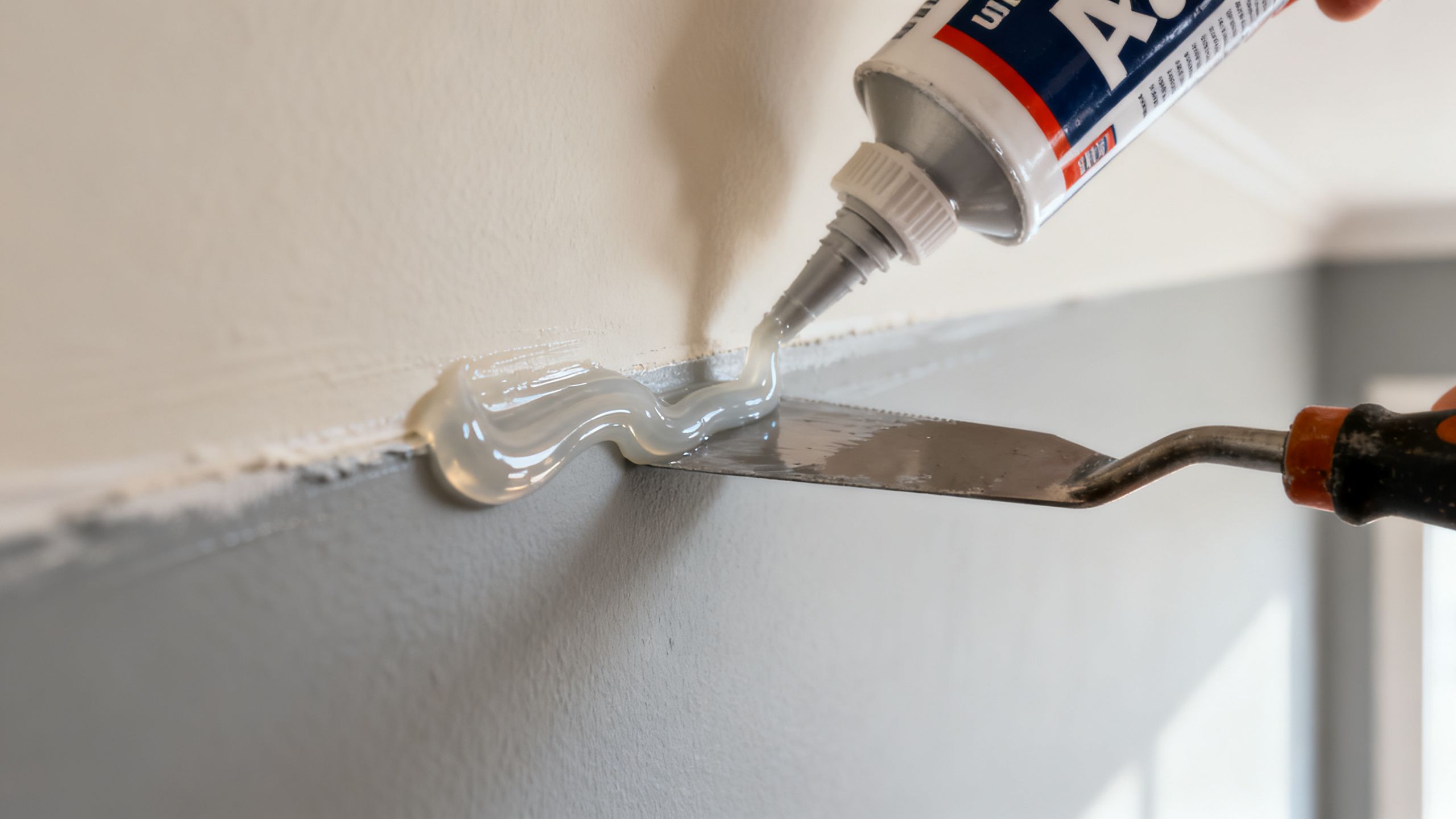
Flexible decorator's caulk is different because it can accommodate a limited amount of movement. It is not a structural repair and it is not magic, but it is much better suited to a fine, active junction than a rigid filler. The bead needs to be applied to a clean, stable gap, tooled properly and allowed to dry before painting.
Always follow the product guidance rather than relying on the word "caulk" alone. For example, manufacturers such as Everbuild provide product information for flexible decorating sealants that can help you check whether a product is intended for this type of internal joint.
Even flexible caulk can eventually show a line again if the movement is substantial. That is not a reason to return to rigid filler. It means the joint may need a finish that bridges and conceals it completely.
How to Fix It Properly — Flexible Caulk vs Coving
There are three sensible repair routes. The right choice depends on whether the plaster is sound, how active the joint is and whether you want a practical repair or a finish that hides the junction permanently.
1. Flexible decorator's caulk
For a narrow crack where the plaster on both sides is sound, flexible decorator's caulk is usually the first option. The old loose filler should be removed carefully rather than simply covered. Dust and friable material need to be cleared, and any damp or active leak must be dealt with before decorating.
Apply a consistent bead into the junction, then tool it neatly so it makes contact with both sides without leaving a bulky ridge. Once fully dry, it can normally be painted with the appropriate emulsion. The result will flex with ordinary movement and should last far longer than a rigid filler repair, although a very active joint may eventually show a hairline again.
This is the cheapest and most DIY-friendly option, but neat preparation matters. A rough, overfilled bead can draw attention to the crack rather than solve the visual problem.
2. Coving or cornice
If the line keeps returning or you want the most reliable visual result, coving or cornice is often the genuinely permanent answer. It bridges the wall-ceiling junction, covers the movement line and creates a deliberate architectural detail rather than leaving the joint exposed.
Coving does not stop the wall and ceiling from moving. It makes that movement invisible. That distinction is important: the building can continue to respond normally while the finish remains clean.
The cost depends on the size of the room, access, the profile and material selected, and whether old coving has to be removed. Simple lightweight coving is different to a detailed plaster cornice, and awkward corners or uneven walls add preparation time. At Gents Venetian Plastering & Rendering, we are honest with customers when coving is likely to be a better long-term choice than repeatedly repairing the same line.
3. Scrim tape and re-skim
Flexible caulk is not appropriate if the plaster itself has failed. Where the edge is hollow, crumbling, detached or significantly broken down, the unstable material needs to be removed or stabilised first.
The junction may then need scrim tape, suitable backing and a fresh skim. Scrim helps reinforce a repaired area, but it should not be used as a shortcut over loose plaster or an unresolved movement problem. If the underlying surfaces continue to move, a rigidly repaired skim can still crack.
A useful rule is simple: use caulk for a sound moving joint, coving to hide a recurring movement line, and scrim and re-skimming where the plaster has genuinely failed. More general advice on diagnosing plaster problems is available in our article about what your wall surface may actually need before plastering.
When a Junction Crack Does Signal Something More
The reassurance applies to a plain, fine crack that follows the wall-ceiling line. It should not be used to dismiss a changing pattern or other signs of movement.
Arrange a professional assessment if the crack is around 5mm or wider, is visibly growing over a short period, or has become accompanied by cracking elsewhere. Diagonal cracks through walls, stepped cracks in masonry and cracks that pass through the corners of doors or windows deserve more attention than a single hairline junction line.
Doors and windows that suddenly stick can indicate distortion, although seasonal swelling, paint build-up and ordinary joinery problems can cause the same symptom. The context matters. A horizontal crack along the tops of walls may also suggest roof spread, particularly in an older property where the roof structure is exerting outward pressure on the walls.
Water damage must be treated separately as well. A leak from the roof, gutter or plumbing can weaken plaster and create cracking that will not be solved by caulk. If you can see staining, dampness, mould, loose plaster or a ceiling that is sagging, deal with the source and have the affected area assessed before decorating.
Gents Venetian Plastering & Rendering has more than 50 years of combined experience and works across Bristol and Bath. We can help distinguish a cosmetic junction repair from failed plaster or a wider building issue; our plastering guidance also explains why hollow or breaking-down material should not simply be covered.
The Old Lath and Plaster and New Build Factors
In pre-1930s homes, lath and plaster ceilings are especially prone to fine cracking at the edges. Timber laths, plaster keys, joists and surrounding walls do not all respond identically to seasonal changes. Older properties can also have years of previous repairs layered into the junction, making the line more likely to open again.
That does not automatically mean the ceiling is unsafe. A stable, fine edge crack is often a normal consequence of how the ceiling was built and how the materials have aged. Loose or sagging plaster is a different matter and needs proper attention.
New-build homes have their own version of the same issue. During the first year or two, materials dry, shrink and settle. Timber components adjust, plasterboard joints respond to changes in humidity and small movements can show at ceiling edges. This is common, but a crack should still be monitored if it changes significantly or appears alongside sticking openings and other defects.
Both old and new properties benefit from the same principle: do not force a rigid repair across a joint that moves. Flexible caulk is suitable for a sound, narrow line, while coving or cornice can provide the cleanest long-term finish when the crack is persistent.

FAQ
Why does the crack between my wall and ceiling keep coming back?
Because the wall and ceiling move independently. The ceiling flexes with the joists and loft above it, while the wall responds differently to temperature, humidity and building movement. The junction acts like a movement joint, so rigid filler cracks when the two sides move.
Across the recurring cracks we see in Bristol and Bath, this is the single explanation homeowners are most often not told. It is usually not that you used the wrong filler or applied it badly; the material was rigid in a joint that needed to move.
Is a crack where the wall meets the ceiling serious?
A straight, fine horizontal crack that stays at the junction is almost always cosmetic movement, not subsidence. It becomes more concerning if it is wide, rapidly growing, diagonal, stepped or connected with cracks elsewhere.
Check for associated signs such as sticking doors or windows, sagging plaster, damp, or horizontal cracks along the tops of walls. Without those symptoms, a narrow ceiling-line crack is generally a decorating and movement-joint issue.
How do I permanently fix a wall-ceiling crack?
For a sound but moving joint, use a good flexible decorator's caulk, apply it neatly and paint it once dry. If the line keeps returning or you want it hidden completely, coving or cornice is usually the most permanent visual solution because it bridges the junction.
If the plaster has broken down, the proper repair may involve removing loose material, applying scrim tape and re-skimming. Do not use coving or caulk to conceal damp, loose plaster or a structural defect.
Why does my ceiling crack keep reappearing after filling?
Most likely, the filler is rigid and the junction is moving. Every time the ceiling flexes against the wall, stress is transferred into the filler. It may look perfect after sanding and painting, but the movement has not stopped.
This is why our advice is to stop treating it as a simple hole. Match the repair to the joint: flexible caulk for a narrow sound junction, or coving where the movement line is persistent and you want it concealed.
Should I use caulk or filler for a wall-ceiling crack?
Use flexible decorator's caulk for a narrow crack at a sound wall-ceiling junction. Use filler for local holes and stable defects, not as a lasting bridge across a moving joint.
Check the manufacturer's instructions because products vary. A product intended to be sanded hard is not the same as a flexible joint sealant. Preparation, tooling and painting are just as important as the product choice.
Does coving stop wall-ceiling cracks?
Coving does not stop the wall and ceiling moving. It covers the junction so that ordinary movement no longer appears as a visible crack. That makes it the most reliable finish for a recurring line.
It must be fitted to sound surfaces, and any loose plaster or damp should be dealt with first. A plaster cornice can also suit period properties where a more traditional finish is wanted.
Is a horizontal crack where the wall meets the ceiling subsidence?
Usually not. A fine, straight horizontal crack along the ceiling line is normally a movement-joint crack, not subsidence. The pattern associated with more serious movement is more likely to be wide, diagonal or stepped, and may occur with sticking openings or cracks in other areas.
The specific finding from our recurring-junction work is that the wall and ceiling are separate structures. Their independent movement explains the crack in the vast majority of cases.
Why do new-build ceilings crack at the edges?
New buildings dry and settle during the first year or two. Plasterboard, timber, joists and other materials adjust at different rates, and changes in heating and humidity can make the ceiling edge more visible.
A fine, stable edge crack is common and can often be repaired with flexible caulk once the building has settled. Rapid growth, wide gaps or associated movement should still be assessed rather than automatically blamed on normal settlement.
Why do old lath and plaster ceilings crack at the edges?
Lath and plaster ceilings contain timber laths and plaster keys fixed to joists, while the adjoining wall may be made from different materials. Seasonal timber movement and slight ceiling flexing can therefore open a line at the perimeter.
Older repairs, loose plaster and previous water damage can make the problem worse. If the ceiling is sagging, hollow or crumbling, it needs more than a surface bead of caulk. Stable fine cracks, however, are often cosmetic and movement-related.
When should I worry about a ceiling crack?
Take it further if it is around 5mm or wider, growing rapidly, diagonal or stepped, or accompanied by sticking doors and windows, cracks elsewhere, damp, sagging or loose plaster. Horizontal cracking along the tops of walls can also warrant an assessment for possible roof spread.
A single fine line along the wall-ceiling junction, with no other symptoms, is usually not a structural emergency. Photograph and monitor it, then choose a flexible repair or coving rather than repeatedly applying rigid filler.