
Spray cork and external wall insulation (EWI) are not really the same thing: EWI is a thick insulation system that significantly cuts heat loss, but it is costly, disruptive and changes the wall’s depth and appearance. Spray cork is a thin, breathable coating that adds a modest thermal benefit alongside weather protection and a refreshed finish, with far less disruption; the right choice depends on whether you want serious insulation or a breathable, lower-disruption finish.
Spray cork and EWI are not the same thing
The two systems can look similar from a distance because both are applied to the outside of a building and can leave it with a new rendered finish. Their main purpose, however, is different. EWI is designed to add substantial insulation to a wall. Spray cork is a coating system, not a substitute for that insulation.
That distinction matters in Bristol, where energy costs, damp weather and older solid-wall homes can make it tempting to look for one exterior treatment to solve several problems at once. A vapour-permeable finish may be useful on a suitable wall, but it does not provide the thermal performance of insulation or resolve moisture coming through a wall. For more on what a cork coating can and cannot do, see our honest guide to spray cork in Bristol.
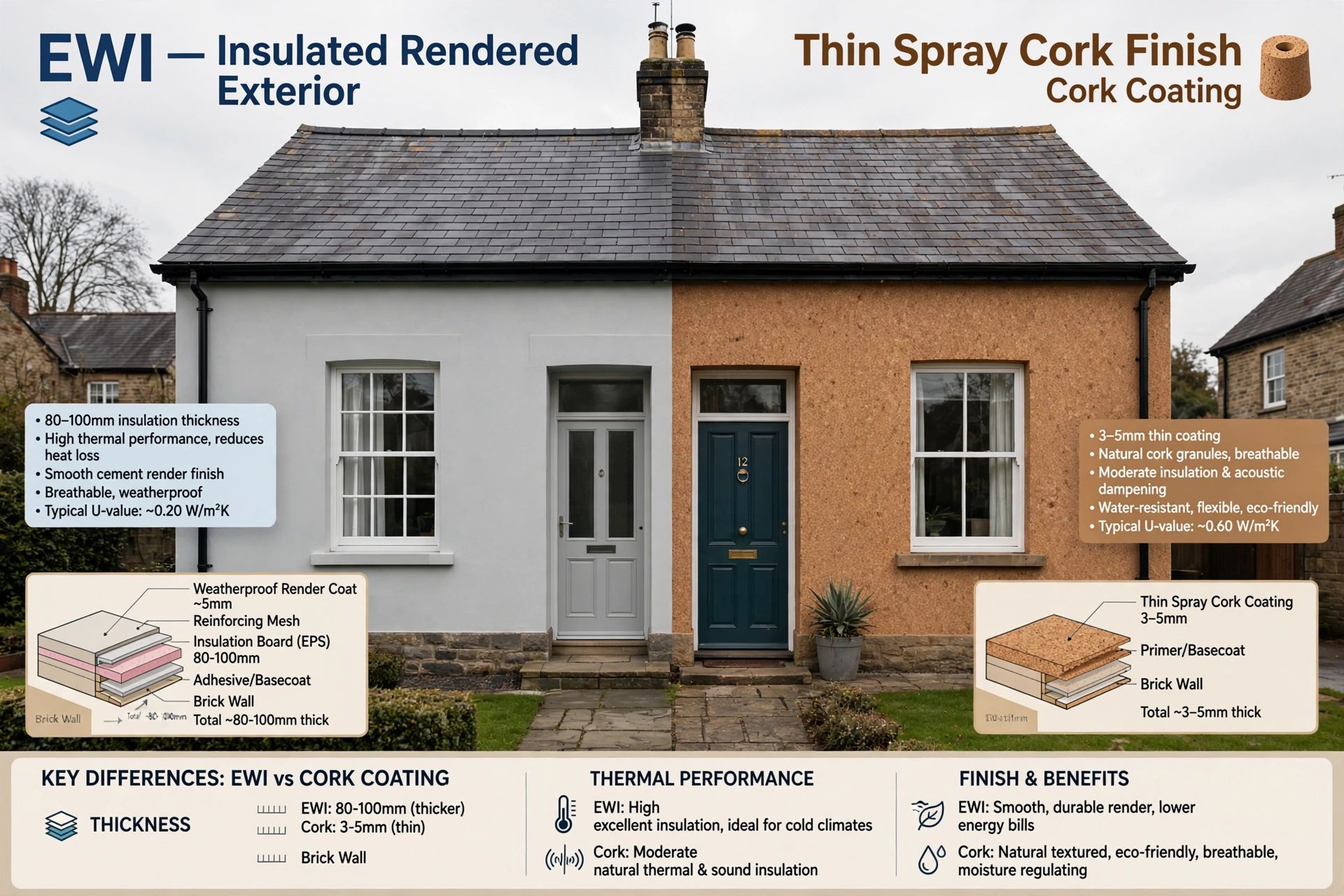
What each system actually is
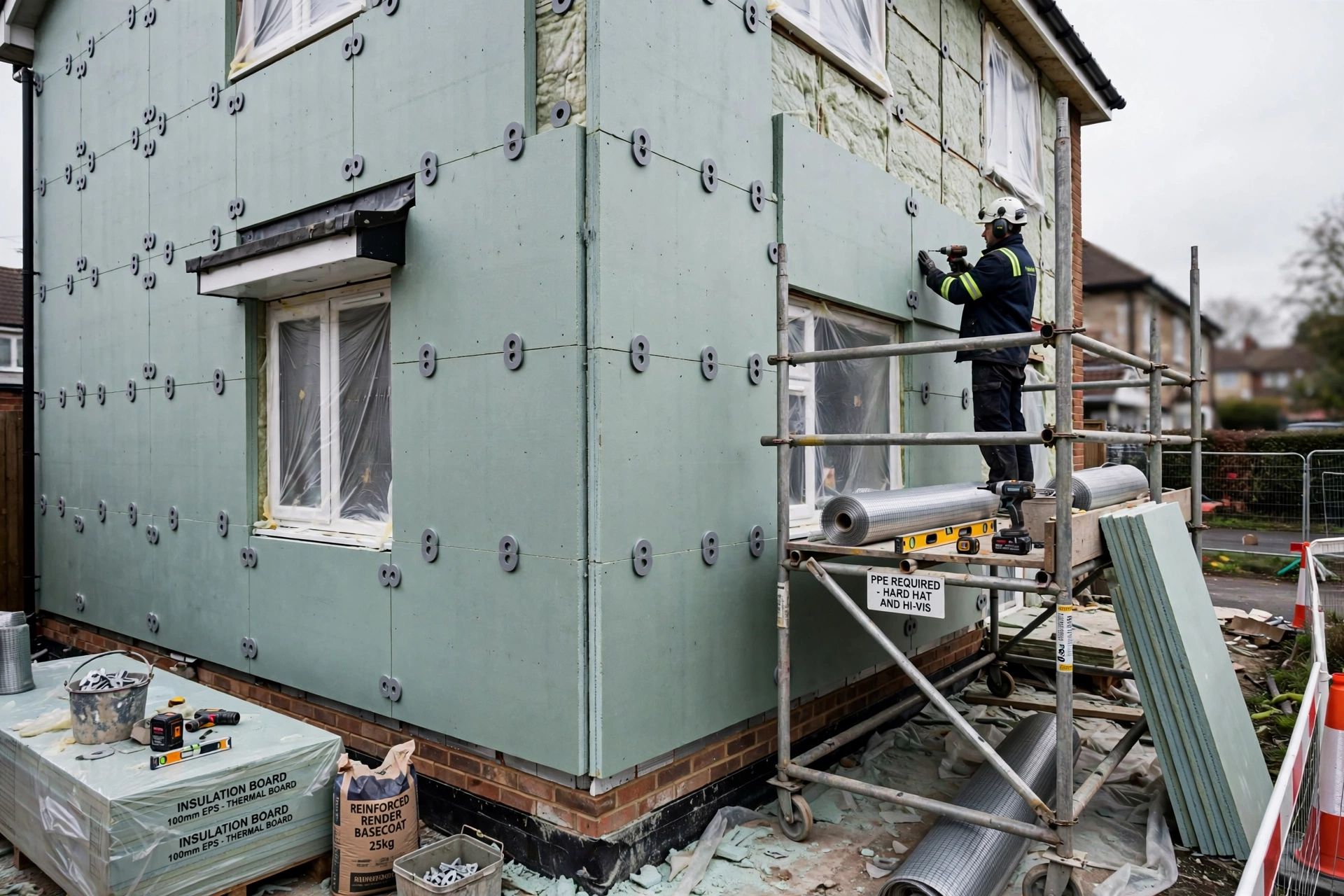
External wall insulation is typically made up of insulation boards, such as expanded polystyrene (EPS) or mineral wool, fixed to the outside of a wall. A reinforced base coat and render finish are then applied over the boards. The extra insulation reduces heat loss through the wall, but it also adds considerable thickness and needs careful detailing around openings and junctions.
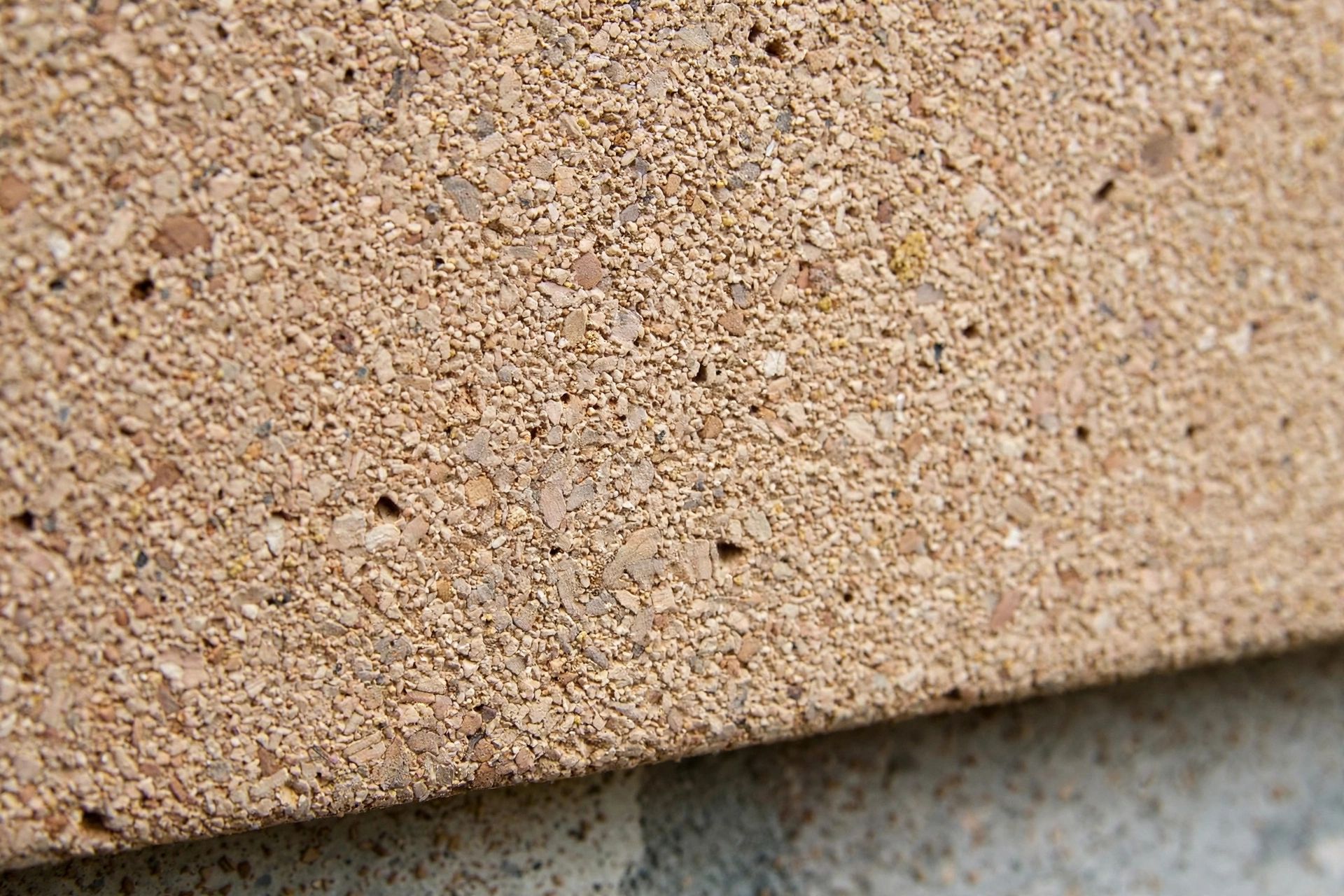
Spray cork is a thin coating made with recycled cork and resin, sprayed onto a suitable exterior substrate, often existing render. It can provide a water-resistant, textured finish and is vapour-permeable when used as part of a compatible system. Its thermal effect is modest: it may make the wall surface feel warmer, but it is not a layer of insulation comparable to EWI.
The thermal reality: insulation vs modest benefit
If the main aim is to reduce heat loss through an external wall, EWI is the dedicated insulation option. Properly designed and installed, it can make a significant difference to a wall’s thermal performance and U-value. Any performance figures published for a particular system should be treated as manufacturer or system-specific claims, not as a guarantee for every home.
Spray cork’s thermal effect is much more limited. It can modestly warm the wall surface, which may help with surface condensation in some circumstances, but it does not deliver the serious U-value improvement of proper insulation. Spray cork is not thermally equivalent to EWI and should not replace EWI where substantial heat-loss reduction is the goal.
Neither coating nor insulation should be used to cover up unresolved damp. The moisture source and the condition of the substrate need to be understood first; otherwise, problems can remain behind the new finish. Our guide explains why spray cork does not automatically stop damp or condensation.
Head-to-head comparison
The short version: EWI does far more to insulate; spray cork is a thinner, lower-disruption coating with a more modest thermal effect.
| Factor | Spray cork | External wall insulation (EWI) |
|---|---|---|
| Thermal performance | Modest thermal and surface-warming benefit; not a deep retrofit | Designed to significantly reduce heat loss and improve the wall’s U-value |
| Wall thickness added | Thin coating; generally keeps the existing wall profile | Adds substantial depth, requiring careful detailing |
| Disruption | Usually less disruptive when the existing substrate is sound and suitable | Bigger exterior project involving insulation boards, fixings, detailing and a new finish |
| Cost level | Coating-level cost; far cheaper than EWI, but does far less thermally | Major investment; cost depends on the building and system, and grant routes may be available |
| Appearance and profile | Refreshes the surface while largely retaining the wall’s profile | Changes the wall’s depth and finish; details around openings may change |
| Breathability | Vapour-permeable options are available; check compatibility with the wall | Can be specified as a breathable system, but the full build-up must suit the wall |
| Best use | A breathable, weather-resistant refresh over suitable, sound render | Serious improvement to wall insulation when budget and building details allow |
Disruption, appearance and cost
EWI is a larger job than applying a coating. The added depth affects window reveals and sills, and may require adjustments or careful junction detailing at eaves, doors, pipes and other fittings. The work can change the proportions and appearance of a house. It is also a major investment, although grants or other support may be available depending on the property and current schemes.
Spray cork is much thinner and is generally less disruptive when the existing render is sound and suitable for coating. It can refresh a weathered exterior without the same change to the wall profile. It is far cheaper than EWI, but that lower cost reflects what it is: a coating with a modest thermal benefit, not a comparable insulation upgrade. Actual costs depend on the size and condition of the wall, access, preparation and chosen system. Our spray cork cost guide for Bristol discusses the factors that affect pricing.
Gents Venetian Plastering & Rendering offers render and spray cork in Bristol and is newly offering spray cork. The team brings more than 50 years of combined experience in plastering and rendering; we do not claim a history of completed spray-cork or EWI projects.
Breathability on older Bristol homes
Many older Bristol properties have solid walls, and period buildings can need a different approach from modern cavity-wall homes. A wall’s construction, existing render and exposure to rain all matter. Both EWI and spray cork can be specified in breathable, vapour-permeable systems, but no material is automatically suitable for every building. An incompatible build-up can restrict moisture movement and contribute to problems within the wall.
Spray cork’s vapour permeability can be a genuine plus on some older walls, provided the coating system and substrate are compatible. Breathable does not mean waterproof against every source of moisture, nor does it mean that a coating will cure damp. Water ingress, damaged render, defective gutters and other causes need to be identified rather than hidden beneath a new finish.
Which should you choose?
Choose EWI if your priority is a serious reduction in heat loss through the walls, and your budget, property details and tolerance for a larger exterior project allow for it. It is the option designed to deliver meaningful insulation, but the detailing and finish need to be planned for the particular house.
Choose spray cork if your priority is a breathable, weather-resistant exterior refresh with less disruption and a modest thermal or surface-condensation benefit, especially when the existing render is sound. Do not choose it as a stand-in for EWI if insulation is the goal. In some projects, insulation and a suitable exterior coating can be complementary: cork may be considered as a finish, but it does not replace the insulation layer.
Before choosing either system, an assessment should look at the wall construction, substrate condition, moisture sources, exposure and your insulation goals. For general guidance on external wall insulation, see the Energy Saving Trust’s advice on solid wall insulation.
Frequently asked questions
Is spray cork as good as EWI for insulation?
No. EWI is designed to deliver a significant improvement in wall insulation. Spray cork gives a modest thermal benefit, mainly by warming the surface slightly. They are not the same thing thermally.
Is spray cork cheaper than EWI?
Generally, yes. Spray cork is a coating-level project, while EWI is a major insulation and rendering project. But the lower price does not mean similar insulation performance: cork costs less and does far less to reduce heat loss.
Does spray cork reduce heat loss?
It may offer a modest thermal benefit, but it is not a substitute for dedicated wall insulation. If your primary concern is substantial heat loss through the walls, EWI is the system designed for that purpose.
Can spray cork replace external wall insulation?
No, not when the goal is serious insulation or a meaningful U-value improvement. Spray cork can refresh and protect a suitable exterior, but it does not provide the insulation performance of EWI.
Which is less disruptive: spray cork or EWI?
Spray cork is usually less disruptive because it is a thin coating and keeps the wall profile. EWI adds depth, requires more extensive detailing and can affect reveals, sills and eaves. Both still need a suitable substrate and proper preparation.
Is cork or EWI better for a period home?
There is no universal answer. A vapour-permeable cork coating may suit some older solid-wall homes when the existing render is sound, while a compatible breathable EWI system may be appropriate where serious insulation is needed. The wall construction, moisture condition and system design should guide the choice.
Can you have both spray cork and EWI?
They can be complementary in some designs, but cork is a finish, not a replacement for insulation. The specified finish must be compatible with the insulation system and the wall; this needs to be checked as part of the design.
Will spray cork stop damp or condensation?
Not necessarily. Its modest surface-warming effect may help with some surface condensation, but it will not reliably fix damp caused by water ingress or another unresolved moisture source. Identify and address the cause before applying a coating.


